What to do with vegetable scraps instead of throwing them away
Turn carrot peels, onion skins, and celery ends into broth, a windowsill regrow, or compost instead of the trash. This post covers the step-by-step method, plus a quick guide to which scraps to keep and which to skip.
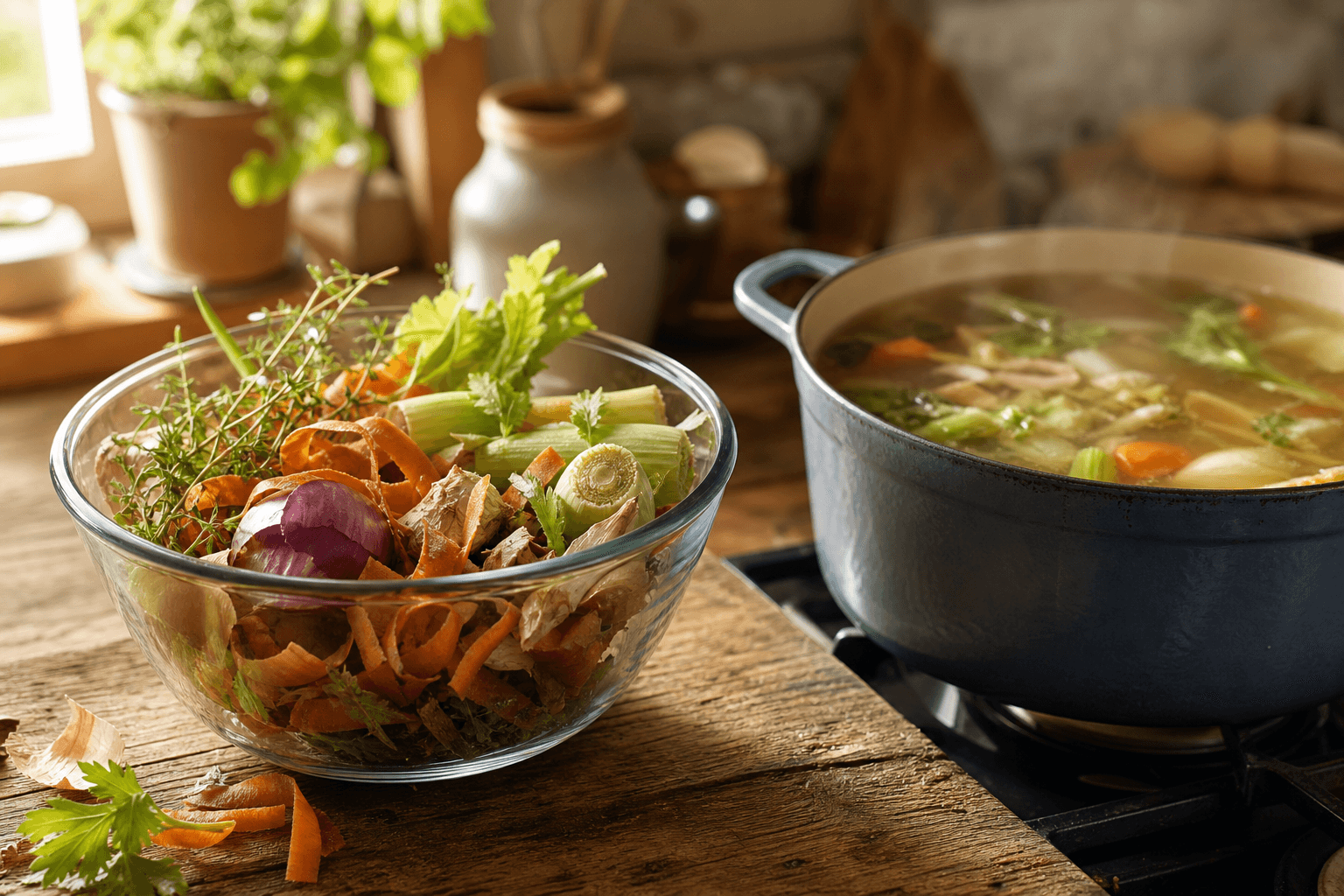
The easiest way to use vegetable scraps is to freeze them in one bag until you have about 4 cups, then simmer with water for 45 minutes for free vegetable broth. Sturdy scraps like carrot peels, onion skins, and celery ends work best; skip anything moldy or already going bad.
Most of what gets cut off a vegetable before cooking still has flavor, nutrients, or a second life left in it. Instead of scraping peels and ends straight into the trash, you can turn them into broth, regrow a few as new plants, or send them to a compost pile that feeds next year's garden. None of it takes special equipment, and it is one of the easiest habits for cutting food waste at home.
How do you make vegetable broth from scraps, step by step
You do not need a recipe to make broth from scraps, just a bag in the freezer and a pot on the stove.
- Start a scrap bag. Keep a gallon freezer bag or a container in the freezer and add clean vegetable trimmings as you cook: carrot peels and tops, onion skins, celery leaves and ends, mushroom stems, leek greens, and herb stems.
- Fill it up over time. Add to the bag over a couple of weeks until you have around 4 cups of scraps. Write the date on the bag so you know how long it has been collecting.
- Simmer, do not boil. Dump the frozen scraps into a stockpot, cover with about 8 cups of water, and bring to a gentle simmer. A hard boil clouds the broth and can pull bitterness out of the vegetables.
- Cook for 45 minutes to an hour. Longer than that and the broth can turn bitter, especially if there is any cabbage or broccoli in the mix.
- Strain and season. Pour through a fine mesh strainer or cheesecloth, discard the softened scraps (or compost them), and add salt to taste once the broth is done.
- Cool and store. Refrigerate for up to 4 to 5 days or freeze in smaller portions for up to 6 months.
Which scraps work best for broth, and which to skip
Not every trimming belongs in the pot. Some make the broth taste better, and a few can turn the whole batch bitter or cloudy.
| Scrap | Good for broth | Notes |
|---|---|---|
| Carrot peels and tops | Yes | Adds sweetness; use tops sparingly, they can turn bitter |
| Onion and garlic skins | Yes | Deepens color and flavor |
| Celery ends and leaves | Yes | Classic broth base |
| Mushroom stems | Yes | Adds savory depth |
| Leek greens | Yes | Mild, oniony flavor |
| Herb stems (parsley, cilantro) | Yes | Use woody stems like rosemary and thyme sparingly |
| Potato peels | Use sparingly | Can cloud the broth |
| Broccoli, cauliflower, cabbage | Skip or use very little | Turns broth bitter after about an hour of simmering |
| Beet scraps | Skip | Overpowers color and flavor |
| Hot pepper scraps | Skip | Makes the whole batch spicy |
| Anything moldy or slimy | Skip | Toss in the trash or compost, not the pot |
Can you regrow vegetable scraps into new plants
Yes. A handful of vegetables regrow from the base you would normally throw away, using nothing but a glass of water and a sunny windowsill.
- Green onions (scallions) regrow the fastest. Keep about 1.5 inches of the white base with roots attached, stand it in an inch of water, and change the water daily. New green shoots appear within days.
- Celery regrows from the root end. Cut the bottom 2 inches off the bunch and set it in a shallow dish of water. New leaves and stalks grow from the center in about a week.
- Romaine, butterhead, and iceberg lettuce all regrow from the base. Stand the root end in a little water, and small roots and new leaves form in three to four days.
- Bok choy regrows the same way as lettuce and celery, sending up new leaves from the base in water.
- Garlic cloves will not regrow a full bulb, but a clove left in water sends up flavorful green shoots you can snip like chives.
These regrown scraps will not replace a full harvest, but they are a fun, no-cost way to stretch a few meals and keep something growing on the counter.
What about composting the scraps you can't use again
Once you have pulled out what works for broth or regrowing, the rest can still skip the trash can. Vegetable and fruit peels, coffee grounds, and eggshells all count as nitrogen-rich green material for a compost pile. Balance them with two to three parts carbon-rich brown material, like dry leaves, shredded paper, or cardboard, so the pile breaks down without smelling. Bury food scraps under existing compost rather than leaving them on top, and skip meat, dairy, and oily foods, which attract pests and slow everything down.
If you do not have a yard, many cities offer curbside compost pickup or drop-off bins at farmers markets, so scraps still avoid the landfill.
How can you avoid making so many vegetable scraps in the first place
Scrap broth and windowsill regrowing only work on vegetables you already cooked with. The bigger win is using whole vegetables before they wilt in the crisper drawer, so fewer of them turn into waste rather than scraps. Well Stockd tracks what is in your fridge and pantry, flags what is close to its expiry date, and shows which recipes use it up, so you eat the vegetables before they go bad and save the scraps instead of losing them to the trash. See how it works on the best pantry inventory app to reduce food waste page. For more on keeping produce from going bad before you get to it, read how to stop wasting groceries before they go bad and how to stop throwing away food from the fridge.
Frequently asked questions
How long can you keep vegetable scraps in the freezer before making broth?
Frozen vegetable scraps stay safe indefinitely at 0 degrees Fahrenheit, but for the best flavor, use them within about 2 to 3 months of starting the bag. Write the date on the bag when you start collecting so you do not lose track.
Can you eat vegetable scraps raw instead of cooking them?
Some can. Carrot tops, celery leaves, and broccoli stems are edible raw in salads or slaws once washed well. Onion skins, tough herb stems, and anything past its prime are better saved for broth or compost.
Do vegetable scraps need to be washed before you freeze them?
Give them a quick rinse to remove dirt before they go into the freezer bag. You do not need to peel or trim further, since they are going into a strainer later anyway.
Sources: Freezing and food safety, USDA FSIS, Composting at home, US EPA