How to revive wilted vegetables in ice water
Limp lettuce and drooping celery usually aren't spoiled. They're just dehydrated. This covers exactly how long to soak each vegetable in ice water, which ones bounce back, and which ones are already gone for good.
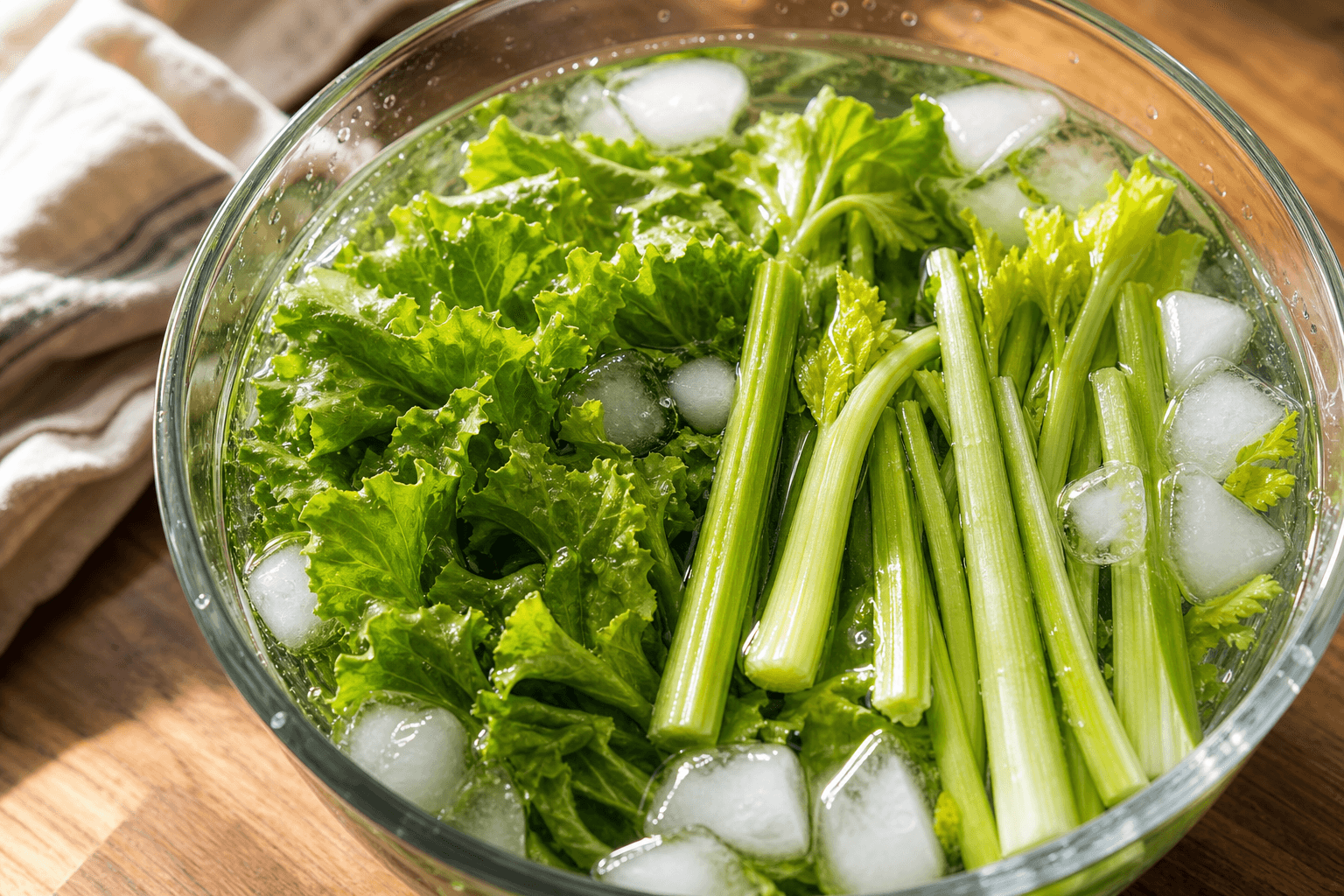
Wilted vegetables usually aren't spoiled. They're just dehydrated. Submerge limp lettuce, spinach, celery, or broccoli in a bowl of ice water for 15 to 30 minutes. The cold water pulls moisture back into the plant cells and restores most of their original crispness, as long as you dry them well afterward and the vegetable isn't already slimy or moldy.
This is one of the easiest wins in how to stop wasting food at home: a five-minute fix that saves a bag of greens you were about to toss. What follows is the exact method, which vegetables respond best, and which ones are too far gone to save.
Why does ice water bring vegetables back to life?
Crisp vegetables get their snap from turgor pressure, the force of water pushing outward against each plant cell wall. As a vegetable sits in the fridge or on the counter, it loses water through its skin faster than it can replace it, the cells go slack, and the leaf or stalk droops.
Ice water reverses that. Through osmosis, water moves from the bowl (high water concentration) into the vegetable's cells (lower water concentration) across the cell membrane. The cold temperature matters too: it slows the enzymes that break down cell walls, so the vegetable rehydrates without also softening or spoiling further while it soaks.
How to revive wilted vegetables step by step
- Fill a large bowl with cold water and ice. A rough ratio of three parts water to one part ice keeps it cold without freezing the vegetable.
- Add a pinch of salt, if you like. It's optional, but a light salt bath can speed up water uptake in lettuce and other leafy greens.
- Prep the vegetable for maximum water contact. Tear lettuce leaves into smaller pieces. Trim the stem ends of broccoli, asparagus, celery, and scallions at an angle so cut water vessels are exposed.
- Submerge leafy greens fully. Push torn lettuce, spinach, or arugula all the way under the water.
- Stand stalked vegetables upright instead. Broccoli, asparagus, celery, and herbs like parsley or cilantro do better propped in a cup of cold water, stems down, like a bouquet of flowers.
- Give it 15 to 30 minutes, checking at the 10-minute mark. Vegetables rarely need more than 30 minutes, and soaking much longer can leave them waterlogged and mushy instead of crisp.
- Dry thoroughly. Use a salad spinner or pat everything dry with a towel before using or refrigerating it. Wet vegetables in a sealed container turn slimy fast.
How long should you soak each vegetable?
| Vegetable | Prep before soaking | Soak time | Method |
|---|---|---|---|
| Lettuce | Tear into pieces | 15 to 30 minutes | Full submerge |
| Spinach or arugula | None needed | 10 to 15 minutes | Full submerge |
| Celery | Trim ends at an angle | 30 to 60 minutes | Stand upright in cold water |
| Broccoli or asparagus | Trim stems at an angle | 30 to 60 minutes | Stand upright in cold water |
| Scallions, parsley, cilantro | Trim stems | 20 to 30 minutes | Stand upright in cold water |
| Carrots (already peeled or cut) | Peel if needed | 30 to 60 minutes | Full submerge |
Which vegetables can't be revived in ice water?
Not everything bounces back, and it's worth knowing the difference between dehydrated and truly spoiled.
Skip the ice bath for avocados entirely. Once an avocado turns brown and mushy inside, it won't come back. Ice water can help you avoid that outcome, but it can't reverse it after the fact. Mushrooms are another poor fit: they're porous enough to soak up water rather than release it, and a bath tends to leave them slimy instead of firm. Tomatoes and cucumbers that have gone soft and watery generally stay that way once cut open, no matter how long they soak.
More importantly, ice water is a texture fix, not a safety fix. If a vegetable smells sour, feels slimy on the surface, or shows visible mold, throw it out rather than trying to rescue it. A cold soak can restore crunch to a leaf that's simply lost water, but it cannot undo actual spoilage.
A better long-term fix than reviving vegetables
Reviving a wilted vegetable is a good habit for the produce you already have, but it's still a rescue mission. The vegetables that never get the chance to wilt are the ones you see and use before they slide to the back of the crisper drawer. That's the gap a pantry and fridge tracker like the best pantry inventory app to reduce food waste is built to close: log what's in your fridge, get a nudge before things expire, and shop your own kitchen before it turns into another ice-bath emergency.
For more ways to keep produce out of the trash, see how to stop throwing away food from the fridge and how to stop wasting groceries before they go bad.
Frequently asked questions
Does the ice water trick work on refrigerated vegetables or only counter produce? Both. Vegetables wilt in the fridge too, especially loose greens stored without a bag or container. The same ice water soak works whether the vegetable dried out on the counter or in the crisper drawer.
Can you revive vegetables more than once? Not really. Each time a vegetable loses and regains water, its cell walls take on a little more damage, so the crispness fades faster the second time around. Treat a revived vegetable as something you should use that day, not something you save for later.
Is salted ice water better than plain ice water? Salt gives a small boost by slightly speeding up how fast water moves into the plant cells, but plain ice water still works for most greens. If you're short on time, salt is worth adding; if not, plain ice water and a few extra minutes get you close to the same result.
Sources: America's Test Kitchen, How to Revive Wilted Vegetables; USDA FSIS, "Danger Zone" (40°F - 140°F)