How can you freeze corn on the cob? Blanch times by size
How to freeze corn on the cob using National Center for Home Food Preservation blanching times, how long it keeps, and why cut kernels hold up better.
Yes, you can freeze corn on the cob. How can you freeze corn on the cob so it keeps? Blanch small ears 7 minutes, medium ears 9 and large ears 11, cool them completely, then pack and freeze, as the National Center for Home Food Preservation (NCHFP) recommends. Ears come out softer than kernels you cut off first.
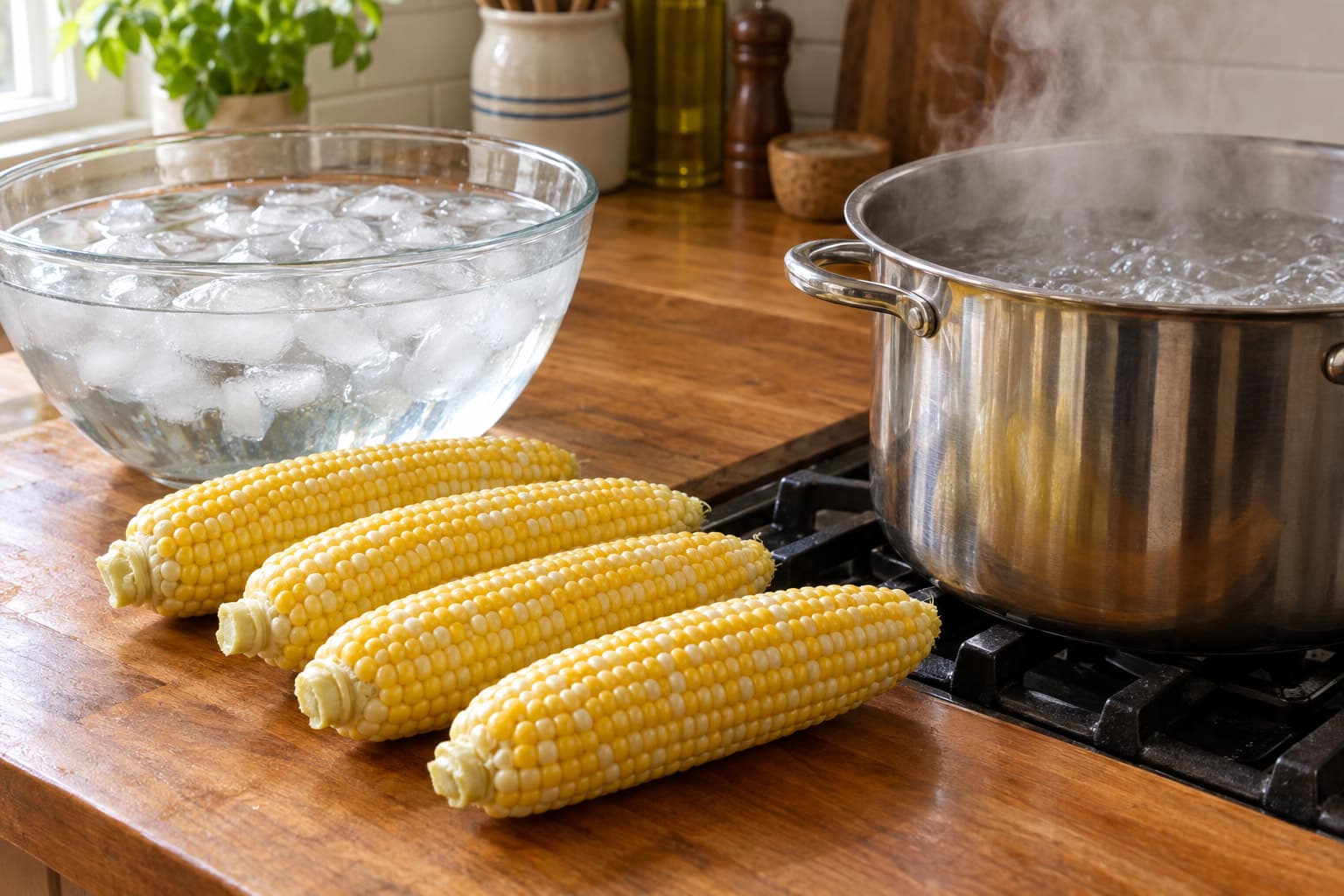
Can you freeze corn on the cob?
Yes, and it's the only way to still bite corn straight off the cob after freezing. NCHFP is upfront about the trade-off, though. Corn frozen on the cob is likely to turn water-logged and mushy, because the dense cob takes longer to blanch, freeze and reheat than loose kernels do.
If you mostly stir corn into chowder, salsa or skillet dinners, freeze kernels instead (steps below). If you want ears for a summer cookout in February, freeze them on the cob and set your expectations.
How can you freeze corn on the cob?
- Husk the ears, pull off the silk and rinse them.
- Sort the ears by thickness, because blanch time depends on diameter.
- Boil a large pot of water and blanch the ears for the time in the table below. Start timing once the water is boiling again.
- Move the ears straight into a sink or bowl of ice water. NCHFP says to cool them promptly and completely or the corn can taste "cobby." Purdue Extension says cooling takes about as long as the blanching did.
- Drain the ears, pack them in freezer bags or wrap them, seal and freeze.
| Ear size | Diameter | Water blanch time |
|---|---|---|
| Small | 1 1/4 inches or less | 7 minutes |
| Medium | 1 1/4 to 1 1/2 inches | 9 minutes |
| Large | Over 1 1/2 inches | 11 minutes |
Skipping the blanch isn't a shortcut worth taking. NCHFP says blanching is a must for almost all vegetables because it stops the enzymes that cause loss of flavor, color and texture, and that under-blanching is worse than not blanching at all.
For cut kernels, NCHFP's whole kernel method is to blanch the ears 4 minutes, cool, then cut the kernels from the cob at about two-thirds of their depth. Pack them with 1/2 inch of headspace, seal and freeze.
How long does corn on the cob keep in the freezer, and how do you thaw it?
| Question | Answer |
|---|---|
| Best quality | NCHFP gives fruits and vegetables 8 to 12 months at 0°F and says to use the shorter end for best quality (NCHFP). USDA FoodKeeper lists 8 months for corn on the cob, so treat 8 as the practical limit |
| Safe to eat after that? | Yes. Frozen food held at 0°F stays safe indefinitely; the time limit is about quality |
| Thawing | Partly thaw ears before cooking so the cob heats through; cooking from frozen is fine for kernels (NCHFP) |
| After cooking | Serve right away. Letting corn sit after thawing or cooking makes it soggy |
Our corn storage page shows about 300 days in the freezer, roughly ten months, which sits inside the NCHFP range but above FoodKeeper's 8 months for corn on the cob. Go by the shorter figure.
When in doubt, throw it out. USDA guidance is that frozen food kept at 0°F stays safe, so the time limits here are about quality. If something smells off, looks slimy or was thawed on the counter, don't taste-test it.
What changes when you freeze corn on the cob, and what is it good for?
The kernels soften and lose some snap. The cob also holds water, so ears can taste a little diluted if they sit a while after cooking. Plan to boil or steam them, add butter and eat them quickly.
Frozen cob corn also works as an ingredient. Cut the kernels off a cooked ear for corn chowder, cornbread, fritters or a quick salad, where a softer texture hardly matters. Our guide to cooking frozen vegetables so they taste good covers the cooking side.
Other foods you can freeze like corn on the cob
The same blanch-cool-pack routine applies to a lot of produce. See our full can-you-freeze-it guide, or try these:
- Can you freeze zucchini?
- Can you freeze celery?
- Can you freeze asparagus without blanching?
- Printable freezer storage chart
Corn on the cob freezing FAQ
Do you have to blanch corn on the cob before freezing?
Yes. Blanching stops the enzyme activity that dulls flavor and texture in the freezer. NCHFP also warns that under-blanching is worse than not blanching at all, so use the full time for your ear size.
Is it better to freeze corn on the cob or cut kernels?
Kernels, for texture. NCHFP says whole kernel corn is likely to be crisper than corn on the cob, but you eat it with a spoon or in a recipe. Freeze ears only if you want to bite them off the cob.
How long can you keep corn on the cob in the freezer?
NCHFP gives 8 to 12 months at 0°F and says the shorter end gives the best quality, and USDA FoodKeeper lists 8 months for corn on the cob. It stays safe longer, but flavor and texture slide.
Want to keep track of what's in your freezer?
Frozen food gets forgotten fast. Add what you have to Well Stockd and it estimates an expiration date for fridge and pantry food from typical shelf life, with the food closest to expiring at the top of your list. Freezer items don't get an estimated date, so write the freeze date on the package. Try it free and add three foods from your kitchen to see what you can cook. Our guide to the best apps for tracking expiration dates compares the options if you want to shop around.
Sources: NCHFP, Freezing Corn, NCHFP, Corn: On or Off the Cob, NCHFP, How Long Can I Store Frozen Foods, NCHFP, Thawing and Preparing Foods for Serving, FoodSafety.gov cold storage chart, USDA FoodKeeper.