How to fry an egg (sunny side, over easy, no stick)
How to fry an egg sunny side up, basted, over easy, over medium or over hard: a time for each style, butter or oil, how to keep eggs from sticking, runny yolk safety, and common mistakes.
To fry an egg, melt a teaspoon or two of butter, or warm the same amount of oil, in a nonstick or well-seasoned skillet set to medium-low, slide the egg in, and cook it until the white is set, about 2 to 3 minutes for sunny side up. For over easy, flip it and cook 20 to 30 seconds longer; for over hard, give it 1 to 2 minutes after the flip, until the yolk is firm.
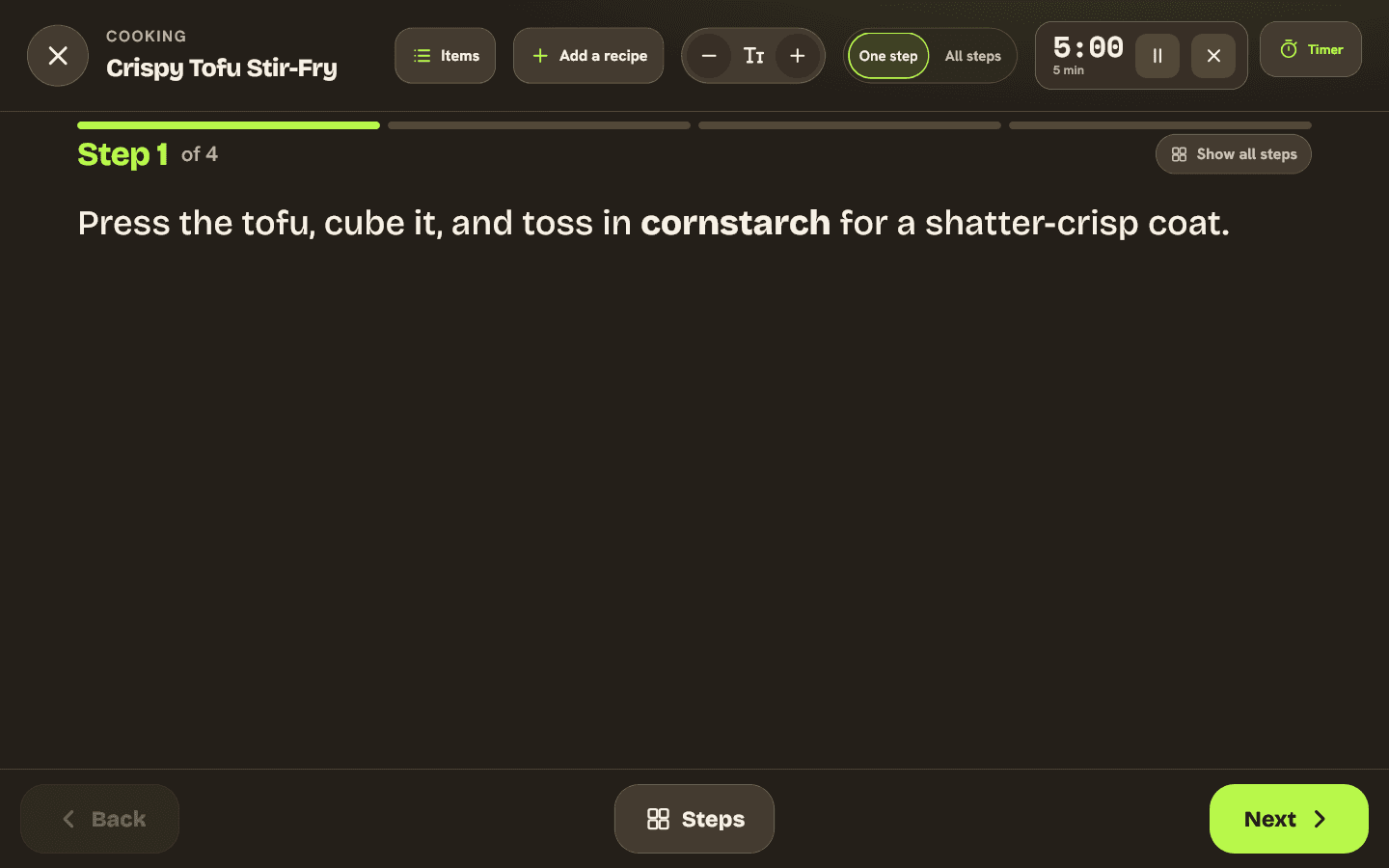
Moderate heat, enough fat and a little patience before you touch the egg are what keep it from sticking or turning tough at the edges. The table below covers every style, and if you'd like a guided practice cook, the eggs lesson in Well Stockd's Cooking School covers fried eggs along with scrambled and boiled.
Fried egg styles and times
Times are approximate for a large egg in a preheated pan over medium-low heat.
| Style | How it's cooked | Time | Yolk |
|---|---|---|---|
| Sunny side up | Not flipped. A lid over the pan for the final minute sets the top of the white | 2 to 3 minutes | Runny |
| Basted | Not flipped. Spoon the hot butter over the white until it turns opaque | 2 to 3 minutes | Runny, with a thin film on top |
| Over easy | Flipped, then cooked briefly | 20 to 30 seconds after the flip | Runny |
| Over medium | Flipped | About 1 minute after the flip | Thick and jammy |
| Over hard | Flipped, yolk sometimes broken on purpose | 1 to 2 minutes after the flip | Firm |
| Crispy edges | Medium-high heat and more oil | 1 1/2 to 2 1/2 minutes | Runny, with lacy brown edges |
Only over hard, with a firm yolk, meets the USDA's advice on eggs, which the safety section below explains.
What are the steps to fry an egg?
- Break the egg into a small bowl or cup. Any shell is easy to fish out there, and the egg goes into the pan gently instead of splashing from a height.
- Heat the skillet over medium-low for about a minute, then add 1 to 2 teaspoons of butter or oil per egg. Butter should foam without browning. Oil should look thin and move easily when you tilt the pan.
- Hold the bowl close to the pan and slide the egg in.
- Leave it alone. The white turns from clear to opaque from the edges inward, and the thin white closest to the yolk sets last.
- Set the top. Put a lid on the pan for 30 to 60 seconds, baste the white with spoonfuls of the hot fat, or flip the egg with a thin spatula.
- Season with salt and pepper, then slide it onto a plate.
How long do you fry an egg for?
About 2 to 3 minutes over medium-low heat for a sunny side up egg with a runny yolk. Add 20 to 30 seconds after flipping for over easy, about a minute for over medium and 1 to 2 minutes for over hard. A hotter pan is faster but makes brown, crisp edges, so turn the heat down if you want a tender white.
Is it better to fry an egg with butter or oil?
Both work, and they give different eggs. Butter adds flavor and gives a soft, tender white, but its milk solids brown and then burn over high heat, so use it with medium-low heat. Oil handles more heat, which is what you want for crisp, lacy edges. Olive oil, a neutral oil such as canola, and bacon fat all fry eggs well.
If you like both, start with a little oil and add a knob of butter once the egg is in the pan.
How to fry an egg without it sticking
- Use a nonstick pan or well-seasoned cast iron or carbon steel. Stainless steel works too, but it needs more fat and a properly preheated pan.
- Use enough fat to coat the whole bottom of the pan where the egg will sit.
- Wait for the white to set before you move the egg. A set white lets go of the pan on its own.
- Use a thin, flexible spatula and slide it all the way under the egg in one move.
To flip without breaking the yolk, get the spatula fully underneath, lift the egg only an inch or so, and turn it over close to the surface of the pan.
Common fried egg mistakes and fixes
| Mistake | What happens | Fix |
|---|---|---|
| Pan too hot | The white blisters and browns before the top sets, and the edges turn tough | Medium-low heat, unless you want crispy edges |
| Pan too cold | The white spreads thin and sticks | Preheat for about a minute and wait for the butter to foam |
| Cracking the egg on the edge of the pan | Shell in the pan and a broken yolk | Crack it on a flat counter into a small bowl |
| Flipping too early | The white tears and the yolk breaks | Wait until the white is mostly set |
| Runny white on top of a sunny side up egg | A clear, slippery layer over the yolk | Put a lid on for the final minute, or baste the top |
| Too little fat in a stainless pan | The egg welds itself to the pan | Use more fat and preheat properly |
Are runny yolks safe?
The USDA's Food Safety and Inspection Service (FSIS) advises everyone to avoid raw or undercooked egg yolks and whites, and to cook eggs until both the white and the yolk are firm. Sunny side up, basted, over easy and over medium eggs all keep the yolk runny or soft, so they don't meet that advice.
The risk matters most for people who are pregnant, young children, older adults and people with weakened immune systems. For them, fry eggs over hard, or use pasteurized eggs in the shell, which FSIS says can be used safely without cooking. Both points are on the FSIS page Shell Eggs from Farm to Table.
Eggs near their date, or no eggs at all
A fried egg shows off a fresh egg best, because a fresher yolk sits up higher and the white spreads less. To check a carton, see how to tell if eggs are still good and how long eggs are good after the expiration date.
Out of eggs entirely? Swaps work well in baking, as in our egg substitutes for cookies, but nothing stands in for a fried egg. Our guides to boiling eggs and scrambling eggs cover the other two classics.
Practice eggs in the Cooking School
Fried eggs are part of Eggs: scrambled, fried and boiled, one of ten written lessons in Well Stockd's course. You read the lesson, answer three questions, then pick a practice dish from recipes you can make with what's in your kitchen and cook it in cook mode. A short checklist afterward asks things like whether the yolk came out the way you wanted, and tells you what to adjust next time.
Lessons 2 to 10 come with Pro. Lesson 1, Knife basics, is free for everyone. See the whole course on the Cooking School page.