How to Keep Cilantro Fresh Longer: The Jar Method
How to keep cilantro fresh longer: the water jar method, the paper towel bag, when to wash it, how to spot spoilage and what to do with extra.
Stand cilantro stems in a jar with some water, cover the leaves loosely with a plastic bag, and put it in the fridge. Utah State University Extension says this keeps cilantro up to a week if you change the water every two days. Wash it only when you're ready to use it.
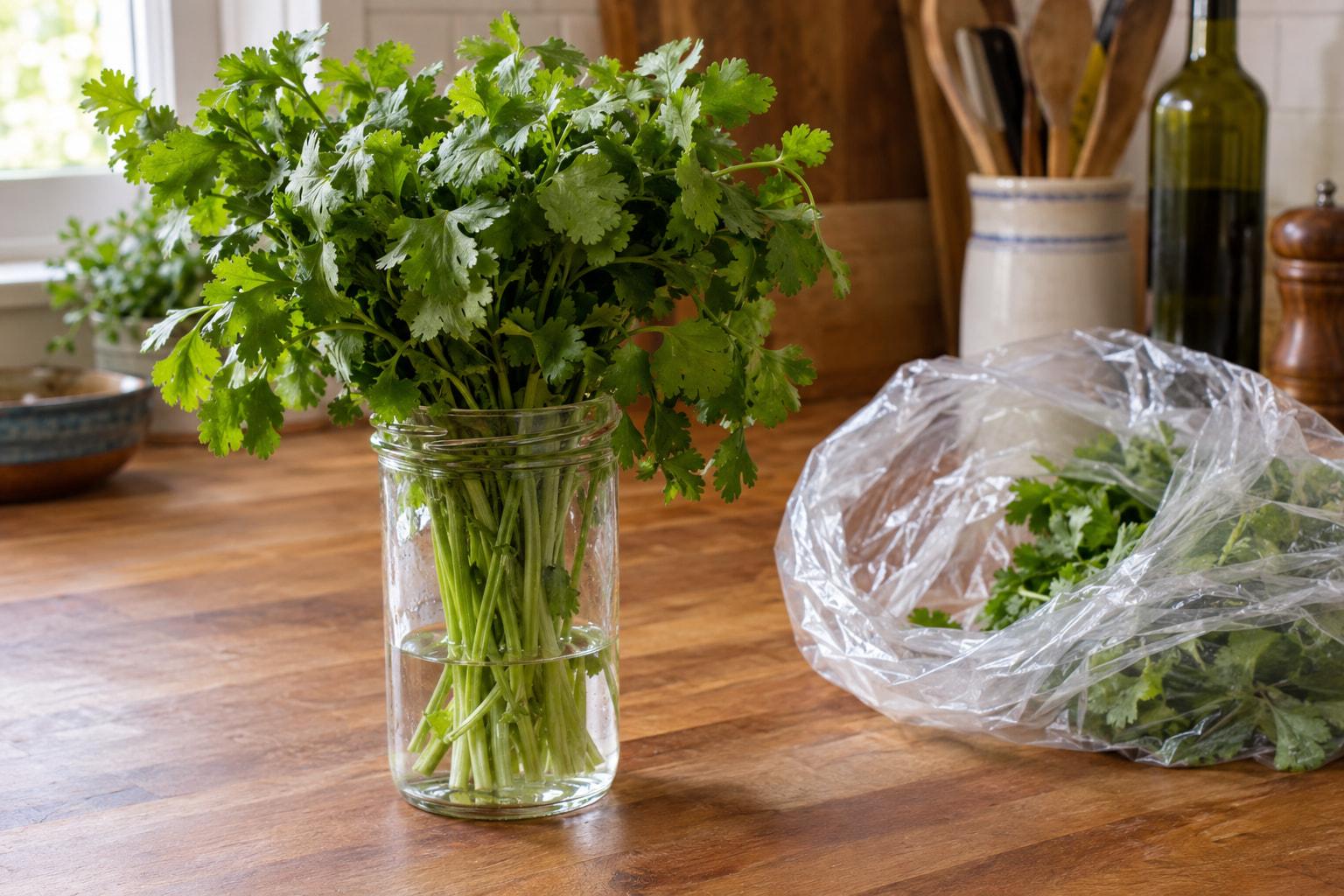
That's the easiest answer to how to keep cilantro fresh. Below is the backup method for when you don't have fridge space for a jar, how to tell when it's gone, and what to do when you can't finish a bunch. We also have a page on cilantro shelf life.
How to keep cilantro fresh: the jar method, step by step
- Take off any rubber band and pick out wilted or soggy stems. Decay spreads, and Better Homes & Gardens' Test Kitchen warns that wilting and decay will rapidly cause neighboring stems to spoil.
- Trim the stem ends and stand the bunch in a jar or glass with water, like cut flowers. Only the stems should touch the water.
- Cover the top loosely with a plastic bag.
- Refrigerate. Change the water every two days.
Utah State Extension's cilantro guide gives "up to 1 week" for this method. Plenty of recipe sites promise two weeks or a month. We trust the university number, so plan on a week. USDA's FoodKeeper data lists 7 to 10 days in the fridge for fresh herbs in general and 2 to 3 weeks for cilantro by name. We go with the shorter figure.
What is the backup method if you don't have room for a jar?
Utah State says that for several days in the fridge you can cover the cilantro loosely with a plastic bag holding 2 to 3 layers of paper towels. Purdue Extension offers another option: store trimmed stems in an airtight container in the refrigerator.
| Method | How | How long |
|---|---|---|
| Jar of water | Stems in water, loose bag over leaves, fridge | Up to 1 week, water changed every 2 days |
| Paper towel bag | Loose bag with 2 to 3 layers of paper towel | Several days |
| Airtight container | Trimmed stems in a sealed container | No time given by Purdue |
Should you wash cilantro before storing it?
Wait until you're about to use it. Utah State says to wash cilantro just before using and blot it dry. A chef quoted by Martha Stewart explains that temperature changes cause condensation, leading to wilting, sliminess and discoloration. Extra surface water works against you in the fridge.
How do you tell when cilantro has gone bad?
Utah State says to avoid bunches with wilted, yellowed or blackened leaves when you buy, and the same signs apply at home. Add slime and an off smell to the list. USDA's power-outage guidance lists fresh herbs among foods that can be kept unless they turn moldy or have an unusual odor. That guidance is about food that lost refrigeration, so we use it as a floor: if you see mold or smell something off, throw the bunch out. When in doubt, throw it out. If it's only slightly limp, see our guide on whether wilted vegetables are still safe to eat.
What can you do with extra cilantro?
Freeze or dry it. Purdue notes cilantro can be frozen or dried for long-term storage. Our post on how to freeze fresh herbs has the method. You can also use the whole bunch: Purdue says leaves and stems are both usable.
Stop guessing how old the bunch is
Add what you buy to Well Stockd and fresh fridge and pantry food gets an estimated expiration date based on typical shelf life, so the food closest to going off sorts to the top. Try it free. If you're comparing options, see our guide to apps that track expiration dates. Our shelf-life guide covers other fresh foods.
Related guides
- Can you store potatoes and onions together?
- How to make strawberries last longer
- How to revive wilted vegetables in ice water
FAQ
How long does cilantro last in the fridge?
Up to a week with the jar method, according to Utah State University Extension.
Can you eat cilantro stems?
Yes. Purdue Extension says you can use cilantro whole, leaves and stems, or just the leaves.
Should cilantro be stored in the fridge or on the counter?
In the fridge. Utah State says cilantro loves cool temperatures and is very perishable.