How to Salvage Freezer Burned Meat (So It Doesn't Go to Waste)
Freezer burn will not hurt you; it just dries meat out. Here's how to trim, brine, and cook your way to a meal worth eating instead of tossing it.
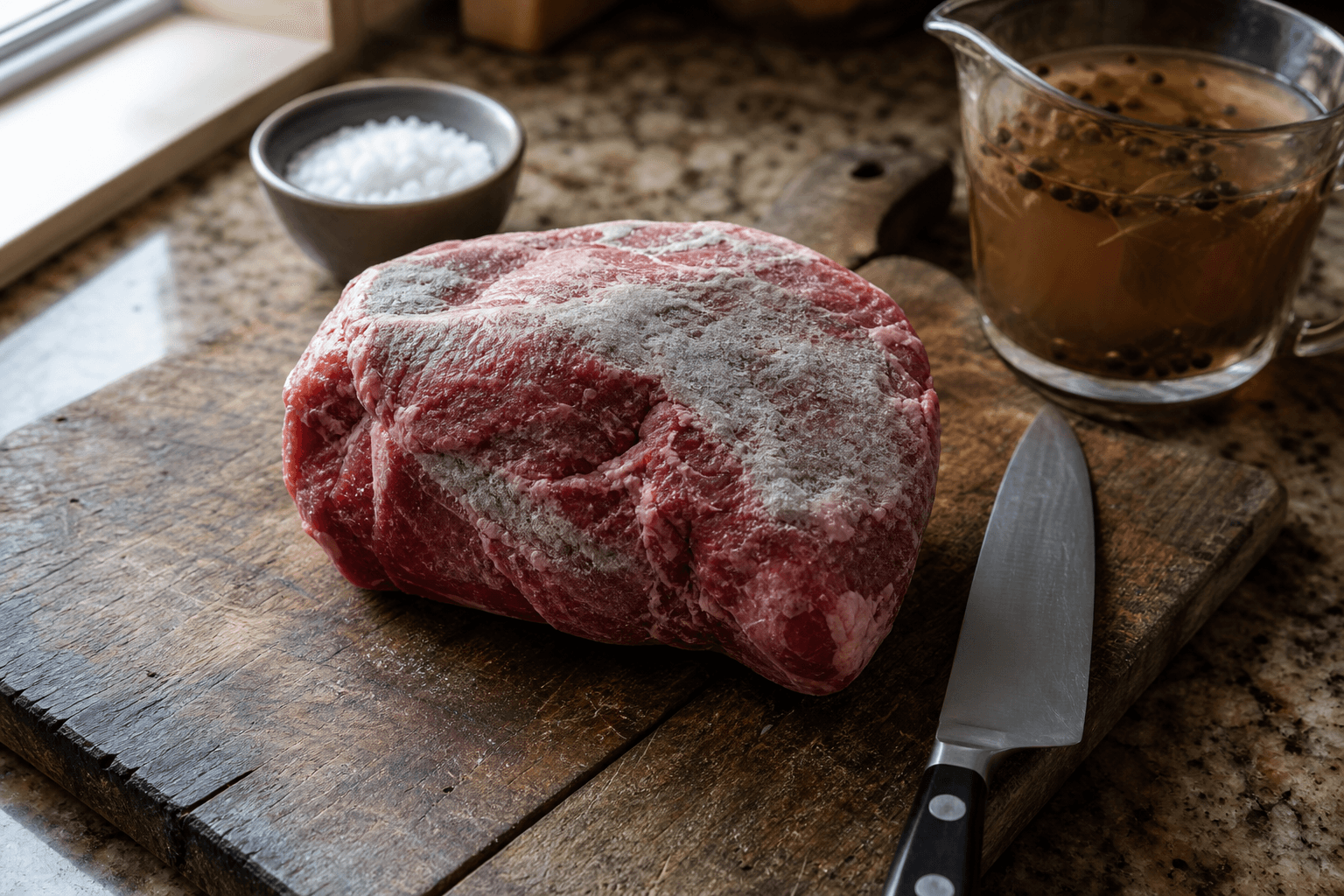
Freezer burned meat is safe to eat, every time. Those gray-white patches are just dehydrated spots from air exposure, not spoilage. Trim off the driest bits, rehydrate what's left with a quick salt brine, then cook it low and slow in liquid with bold seasoning to bring back the flavor and moisture.
What causes those dry gray patches
Freezer burn shows up when air reaches the surface of frozen meat. The moisture inside converts straight from ice to vapor (a process called sublimation) and escapes through gaps in the packaging, leaving behind dry, leathery, discolored patches and a slightly stale smell in the fat. It happens fastest with loose or torn packaging, thin cuts, and meat that's been sitting near the freezer door where the temperature swings a little every time it opens.
The good news, straight from the USDA's Food Safety and Inspection Service: freezer burn is a quality issue, not a safety one. Food kept at 0°F stays safe indefinitely; freezer burn just means some of it dried out. That makes it one of the sneakier ways food gets wasted at home. Nothing smells off, nothing looks slimy, and the meat just slowly loses quality until it's easy to give up on and toss. If that pattern sounds familiar, our guide to how to stop wasting food at home covers the bigger picture beyond just the freezer.
How to salvage freezer burned meat, step by step
- Thaw it slowly. Move the meat to the fridge 24 to 48 hours before you plan to cook, or submerge it (still wrapped) in a bowl of cold water, changing the water every 30 minutes. Skip the microwave or hot water: both cook the edges unevenly and make dry meat even drier.
- Trim the damaged parts. Freezer burn rarely goes deeper than about a quarter inch, so use a sharp knife to cut away the gray or white leathery patches and any fat that smells rancid. For ground meat, trim while it's still partly frozen, since it's much easier to cut cleanly than once it's fully thawed.
- Brine to bring back moisture. A short salt soak counteracts the drying and reseasons the surface at the same time (recipe below).
- Cook it low and slow, in liquid. Braising, stewing, a slow cooker, a Dutch oven, or sous vide all keep the meat surrounded by moisture so nothing evaporates further. Skip the grill or a hot dry pan: direct high heat is the worst match for meat that's already lost water.
- Lean on bold flavor. Acidic marinades (citrus, vinegar, yogurt) plus oil and strong seasoning like garlic, chili, or curry paste mask any lingering flat or oxidized taste. Chili, curry, gumbo, tacos, and hearty stews are more forgiving than a plain seared chop.
- Taste a small piece before you commit. If a bite still tastes distinctly rancid after trimming and cooking rather than just a bit bland, that fat has likely turned. Toss that batch rather than serve a whole meal around it.
How much freezer burn is too much
| Situation | What to do |
|---|---|
| A light frost or a few gray-white spots on a steak or roast | Trim, brine, cook in liquid. Fully salvageable. |
| Ground meat with dry, crumbly patches | Trim off while frozen, then use the rest in chili, tacos, or a sauce where texture matters less. |
| Chicken pieces with leathery skin or dry edges | Pull off badly burned skin, brine, and braise or slow-cook instead of roasting dry. |
| Fatty cuts like sausage, bacon, salmon, or duck | These turn rancid faster than lean cuts. Smell them closely after thawing before deciding. |
| Freezer burn covers most of the surface, or the meat smells sour or rancid after thawing | Not worth cooking. It's still technically safe by USDA standards, but the quality loss usually isn't worth a whole meal. |
A quick brine to rehydrate freezer burned meat
Dissolve 1 tablespoon of kosher salt per cup of cold water (about 4 tablespoons per quart), plus a tablespoon of sugar if you like. Submerge the trimmed meat for 30 to 60 minutes if it's thin or ground, or up to 2 to 4 hours for a roast or bone-in chicken pieces. Pat the meat completely dry before it hits the pan or the pot: a wet surface won't brown. For meat with heavier freezer burn, some cooks change the brine once or twice over a few hours in the fridge, which pulls out more of that stale freezer smell before cooking.
How long meat can sit in the freezer before this happens
Freezer burn isn't inevitable; it mostly comes down to time and how well the meat is wrapped. Here's how long different cuts hold their best quality in a freezer set to 0°F, based on USDA guidelines.
| Meat | Best quality up to |
|---|---|
| Ground beef, turkey, pork, or lamb | 3 to 4 months |
| Beef steaks | 6 to 12 months |
| Beef roasts | 4 to 12 months |
| Pork chops | 4 to 6 months |
| Pork roasts | 4 to 12 months |
| Whole chicken or turkey | 12 months |
| Chicken or turkey pieces | 9 months |
Wrapping matters as much as time. A vacuum-sealed bag or a tightly pressed freezer bag with the air squeezed out slows freezer burn a lot more than the original grocery-store packaging. Pairing that with a habit of using what's in the freezer before it hits those limits, rather than losing track of it in the back, is most of the fix. Our guide to using groceries before they go bad has more on building that habit for the fridge and pantry too.
Keeping the freezer from becoming a graveyard
If freezer burn losses feel like a repeating pattern rather than a one-off, the root cause is usually the same one behind fridge food that quietly goes to waste: food goes in with good intentions and then disappears from view. A pantry and freezer inventory app can close that gap. It logs what's in the freezer with dates, flags cuts that are approaching their best-quality window, and shows you which recipes you can cook with what's already on hand. If that sounds useful, Well Stockd was built for exactly this, so ground beef and chicken thighs get cooked while they're still at their best instead of getting rediscovered as a freezer-burned mystery six months later.
Frequently asked questions
Can I cook freezer burned meat without trimming it first? You can, especially if the burn is light and the meat is headed into a long-cooked soup or stew where texture matters less. For steaks, roasts, or anything you want to sear or roast whole, trimming first gives a noticeably better result since the dry, leathery parts won't tenderize the same way the rest of the meat does.
Does freezer burn mean the meat has gone bad? No. Freezer burn is a quality change from dehydration, not spoilage. According to the USDA's Food Safety and Inspection Service, food kept frozen at 0°F is safe to eat indefinitely; freezer burn just means some spots dried out and lost flavor and texture.
How do I tell freezer burn apart from spoiled meat? Freezer burn looks like dry, grayish-white patches with a leathery texture, usually just on the surface, and the meat itself was frozen the whole time. Spoiled meat feels slimy after thawing, smells sour or off in a way that doesn't go away, or is discolored all the way through rather than just at the surface. If you see those spoilage signs, toss it regardless of whether freezer burn is also present.
Sources: