How to save money on groceries: which app actually helps
Coupons, price comparison, budgeting, waste reduction: which grocery app fits you, plus a one-week check and three habits.
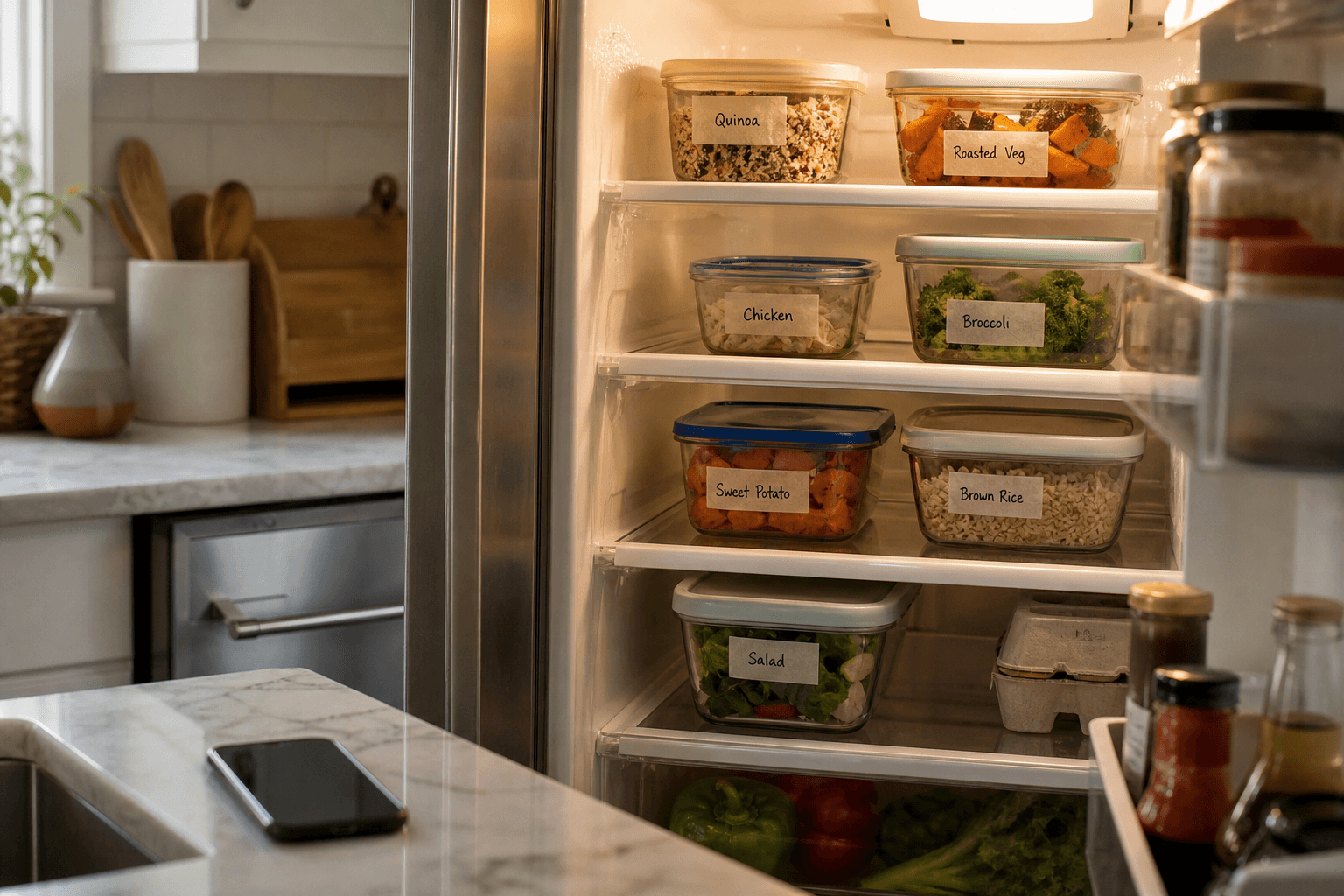
Grocery apps save money in four different places: coupons on what you buy, price comparison on where you buy, budgeting on how much you plan to buy, and waste reduction on what you never eat. Most people install the first kind. For many households the fourth matters more.
The four kinds of grocery-saving app
Search for one and you get a long, mixed list. Sort it before you install anything, because only one of the four kinds is about food you have already paid for.
| Category | What it saves on | Saving size | Effort | Who it suits |
|---|---|---|---|---|
| Coupons and cashback | The price of what you buy | Small on each trip, steady over time | Medium: clip, scan, remember | People who buy branded goods repeatedly |
| Price comparison | Which store you buy at | Small per basket, larger on a big shop | Medium: check before you go | Homes with more than one store nearby |
| Budgeting | Overspend across a month | Depends what you change afterwards | Low: set a ceiling, review | Anyone who wants a ceiling |
| Waste reduction | Food you bought and did not eat | Whatever is currently going in your bin | Low once it is set up | Homes that throw out fresh food |
If the money is leaving through your fridge, a coupon will not catch it.
Coupons and cashback: what they are good for
These lower the price of what is already in your cart. You clip an offer beforehand or scan the receipt after. The money is real, and it suits anyone buying the same branded goods week after week.
Well Stockd is not this kind: no coupons, no cashback, no receipt scanning for rewards, no price comparison. Worth knowing before you install it.
Price comparison: worth it if you have more than one shop nearby
These answer a narrower question: where this basket costs least. Some households split the trip, buying bulk in one store and fresh in another. It only pays if you have the choice and the storage, so check the dozen items you buy in quantity rather than the whole list.
Budgeting apps: useful for knowing, less useful for changing
Budget tools show you where the money went. You set a ceiling, log each trip, and the overspend stops being invisible.
What a budget cannot do is tell you what to cook on Friday with the chicken and greens you already have. It reports the past accurately and changes nothing by itself. Use one for the ceiling, and put a kitchen method inside it.
The fourth kind, and why nobody sells it
The fourth kind helps you eat what you already bought. It logs what comes home, flags the dates, and points dinner at the oldest thing in the fridge.
Nobody markets this kind hard, for a structural reason. A coupon app sits next to a brand that will pay for attention, and a comparison app sits next to a store. A waste app sits next to your bin, and your bin has no marketing budget.
An r/AskReddit thread asked the question directly: "How much money do you honestly think you throw directly into the trash every week in rotten or forgotten groceries? How does this affect you?" Your own kitchen answers that better than any figure we could quote.
Well Stockd sits here, and the waste tools are free: inventory with expiry tracking, can-make matching, the shopping list with a one-tap Walmart cart, the catalog of about 3,950 recipes, and cook mode. There is more on fridge food going to waste.
Keep a free inventory with expiry tracking, then let can-make matching turn what is already there into dinner. Start the free trial
How to find out what your own waste is costing
Skip the averages and find your own number. You need a pen, paper and one ordinary week.
On day one, list the perishables that could spoil and write each price off the receipt. Through the week, mark anything you throw out, with its price. At the end of the week, add up that column. That is your number, and it is the only one worth acting on.
One shopper in a thread about a fridge failure put the stakes plainly: "I can't really afford to replace a couple extra hundred dollars of groceries right now". The weekly fridge tracker does the counting, and reducing waste at home is the routine afterwards.
The four habits that cut it
Four habits cover most of the loss, and none of them takes more than a few minutes.
| Habit | What it stops | Time a week | What it needs |
|---|---|---|---|
| Check before you shop | Second jars of what you already own | Ten minutes | An inventory you can see |
| Cook oldest first | Greens passing their date | Minutes at dinner | Visible expiry dates |
| Plan four, not seven | Produce bought for the three dinners you skipped | Twenty minutes | Four recipes that share ingredients |
| Freeze on day one | Bread and meat you meant to get to | Fifteen minutes | Bags and a marker |
The table is the whole method. If cash is short this week, the cheap meals for payday week fit the same pattern, and the fuller habits guide goes further on each one.
Plan four dinners in Well Stockd with the weekly planner, free for 7 days with no card, and shop once from the list it builds. Start the free trial
Where an app helps and where it does not
What an app adds is memory and timing. It remembers the spinach, flags the yogurt, and turns what is on the shelves into dinner on the night you are too tired to work it out. You save by cooking the thing that would have spoiled, not by clipping anything.
It will not cut prices and it will not pick your store. For savings at the checkout, use a coupon tool. For the bin, use a kitchen tool. Run both.
Free holds that whole waste loop, plus 2 lists, unlimited own recipes and a limited number of voice fills each month. The weekly planner is Pro, at $7.99 a month or $79 a year, with a 7-day no-card trial that starts when you add your first three fresh foods.
Start with free Well Stockd, try the planner on the 7-day no-card trial, and keep what works for your kitchen. Start the free trial
FAQ
What are the best apps to save money on groceries?
It depends where your money goes. Coupon apps cut prices, comparison tools help with shop choice, budgeting tools show the plan, and waste tools help you eat what you buy.
Is there an app to reduce food waste?
Yes. Well Stockd keeps a free inventory with expiry tracking and matches recipes to what you have, so you cook the oldest food first. It offers no coupons or cashback.
How can I save money on groceries?
Count what you throw out for one week, then check stock before you shop, cook the oldest items first, plan four dinners instead of seven, and freeze extras on the day you buy.
Does meal planning save money on groceries?
It can, when the plan starts from your shelves. Four dinners from food you hold cuts trips and repeat buys.
How much money does the average household waste on food?
Figures vary widely, so no single number fits you. Run the one-week count in this guide for your own number.