How to Stop Overbuying Groceries
You keep buying food you already own because you cannot see the cupboard from the shop. Four fixes, a 20-item rule and a 90-second check.
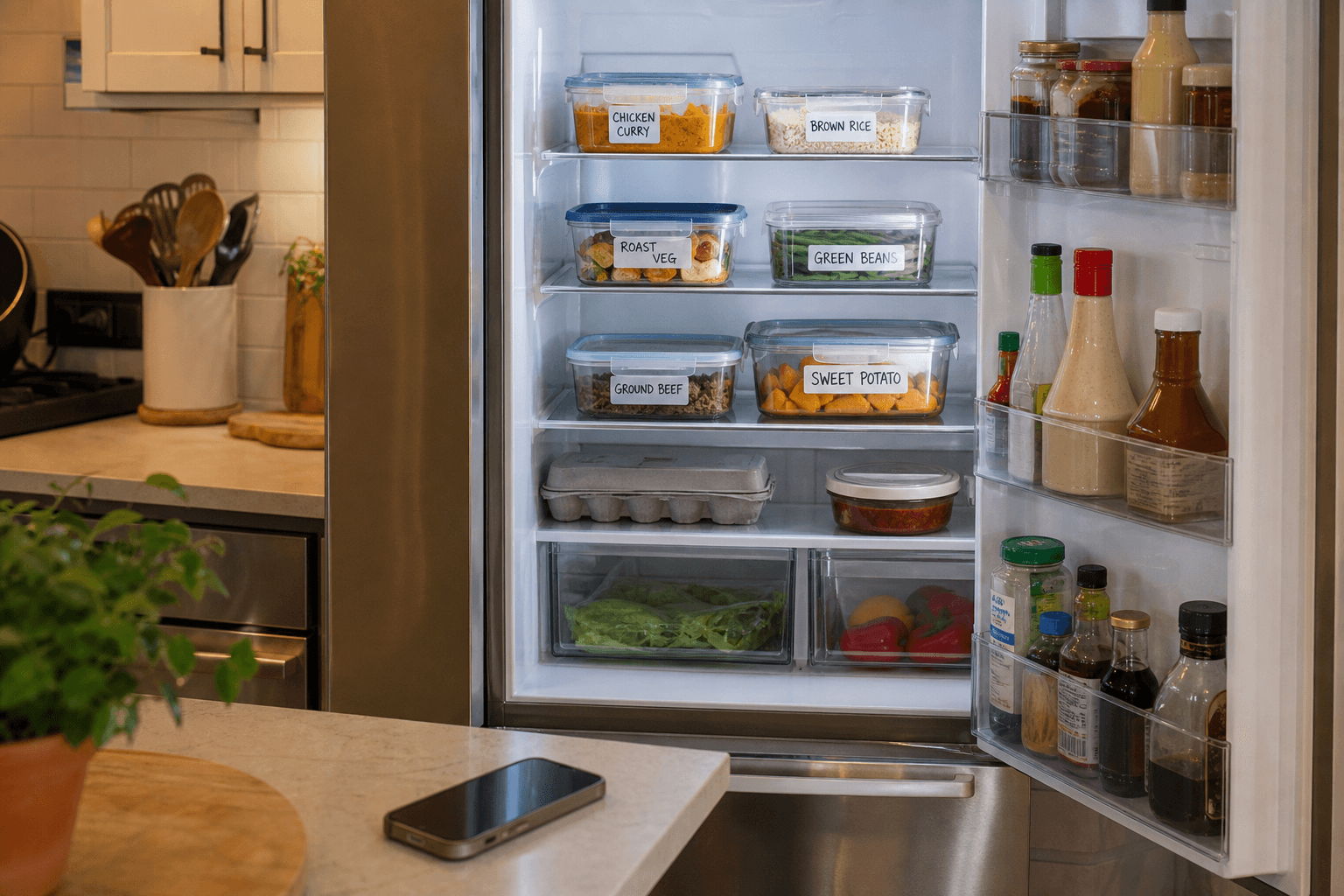
Overbuying is not a discipline problem. You cannot see your cupboard from the shop, the other person in your house shops blind too, and pack sizes exceed the portions you use. Fix those three and the extra jars stop appearing.
It is not discipline
You did not forget the second tin of tomatoes because you were careless. You forgot it because you could not see it, and memory is a poor inventory system. There are four mechanics underneath the extra jars, and each one has a fix that works on a tired Tuesday.
Mechanic one: you cannot see the cupboard from the shop
You stand in the aisle and guess, and the guess favors the extra jar, because running out feels worse than doubling up. The fix is a cupboard you can check from anywhere, which is why seeing what you own matters more than any clever list feature. Well Stockd keeps that inventory free, with expiry tracking, can-make matching, a shopping list with a one-tap Walmart cart, the full catalog and cook mode.
Keep a free inventory you can check from the aisle, matched against about 3,950 recipes, and the guessing stops. Start the free trial
Mechanic two: two people, two carts, no shared view
Two shoppers with no shared view will double buy, and neither of them is doing anything wrong. One of you grabs milk on the way home, not knowing the other bought it that morning. A shopper in a grocery tracking thread described what fixed it: "if I am at a store and my husband is at a different store i can see in real time if he picks up milk and eggs so i dont 'double buy'". The shared kitchen is that view. One Pro account creates the kitchen, and everyone invited shops from the same inventory. Pro is $7.99 a month or $79 a year, with a 7-day no-card trial that starts when you add your first three fresh foods.
Share one kitchen so both shoppers see the same shelves, and start with the 7-day no-card Pro trial. Start the free trial
Mechanic three: the pack is bigger than the portion
You need half a bag of spinach and the shop sells a full one. The half you did not use drifts to the back of the drawer and dies there. This one is not fixed by buying less, because the smaller pack often does not exist. It is fixed by giving the open half somewhere to go. Can-make matching does that job, showing which recipes your already-open items cover, so the rest of the bag has a meal waiting for it.
Mechanic four: the shop is designed for this
Shops are designed to sell you more, and you are not going to out-argue a store layout while hungry. Decide before you go in. A list built from your own shelves turns the trip into a retrieval job. The overspend is rarely treats and impulse buys. The quieter leak is the ordinary staple, bought at full price, that gets home and meets its twin.
| Mechanic | What it looks like | The structural fix | What it costs |
|---|---|---|---|
| Hidden cupboard | Spare jars behind the jars you forgot | Check the inventory from the aisle | Nothing, inventory is free |
| Two shoppers, no shared view | Double milk and eggs | One shared kitchen | Pro, $7.99 a month or $79 a year |
| Pack exceeds portion | Half packs wilting in the drawer | Plan portions, match open items to meals | Nothing |
| Shop sells more | Extras that join their twin at home | A list built from your own shelves | Nothing |
The twenty-item rule
Nobody maintains a full inventory, and you do not need one. Track the twenty items you rebuy most: milk, eggs, rice, tinned tomatoes, the two or three spices you actually reach for. Those are the ones you buy without checking, which is why they duplicate. Log them with expiry dates and let everything else stay outside the system until it earns a place. That is the whole method, and there is more on keeping a pantry inventory. It sticks because it takes minutes.
Why tracking everything fails
Full tracking collapses because the upkeep outruns the payoff almost immediately. Labels fade, leftovers change tubs, and somebody decants the rice without telling the spreadsheet. A home cook in r/homemaking put it plainly: "Putting it in a spreadsheet is a bit tedious and manual and it works for 1 - 2 days but nothing really sticks". The spreadsheet comparison goes through why. The twenty-item rule survives the same week because skipping it feels stranger than doing it.
The pre-shop check, in ninety seconds
Open your inventory before you leave. Scan the twenty, pick one meal around whatever is closest to expiry, and write the list from those two answers. That is the whole pre-shop check, and it fits inside the walk to the car. It covers more ground than any resolution, because it does not depend on your mood. Then recheck in the aisle before each staple goes in the cart.
Run the ninety second check from your shared inventory before every shop, and both carts stay honest. Start the free trial
What to do with what you already overbought
Cook whatever is already open first. Then ask what your shelves can make on their own, using recipes from what you have instead of shopping for new ideas. Two or three pantry-first meals a week will clear the backlog without a purge. Move whatever is left to the front of the shelf, which is the same visibility principle behind cutting fridge waste.
FAQ
How do you stop overbuying groceries?
Make your cupboard visible from the shop, share that view with anyone who shops for your house, and check it before you buy. A short list of the twenty items you rebuy covers most duplicates.
How do you stop buying food you already have?
Check an up to date inventory before you leave and again in the aisle. If the jar is already on your shelf, it stays off your list.
Why do I keep buying duplicate groceries?
You cannot see your shelves from the store, and neither can the other person shopping for your house. Both of you buy defensively, so the same staples land in the cart twice.
How do you stop overspending on food?
Buy from a list built from what you own, cook the ingredients closest to expiry first, and plan portions before pack sizes. The structure does the work that effort alone never sustained.
How do you keep track of what is in your pantry?
Track the twenty items you rebuy most, with expiry dates, and check that list before every shop. A small list you maintain beats a full catalog you abandon.