Mashed potatoes without milk: use the potato water
How to make mashed potatoes without milk: reserve 1 cup of the salted potato cooking water and mash it in with butter. Plus ratios for broth, evaporated milk, olive oil, plant milk and sour cream, with the two extension-published conversions marked.
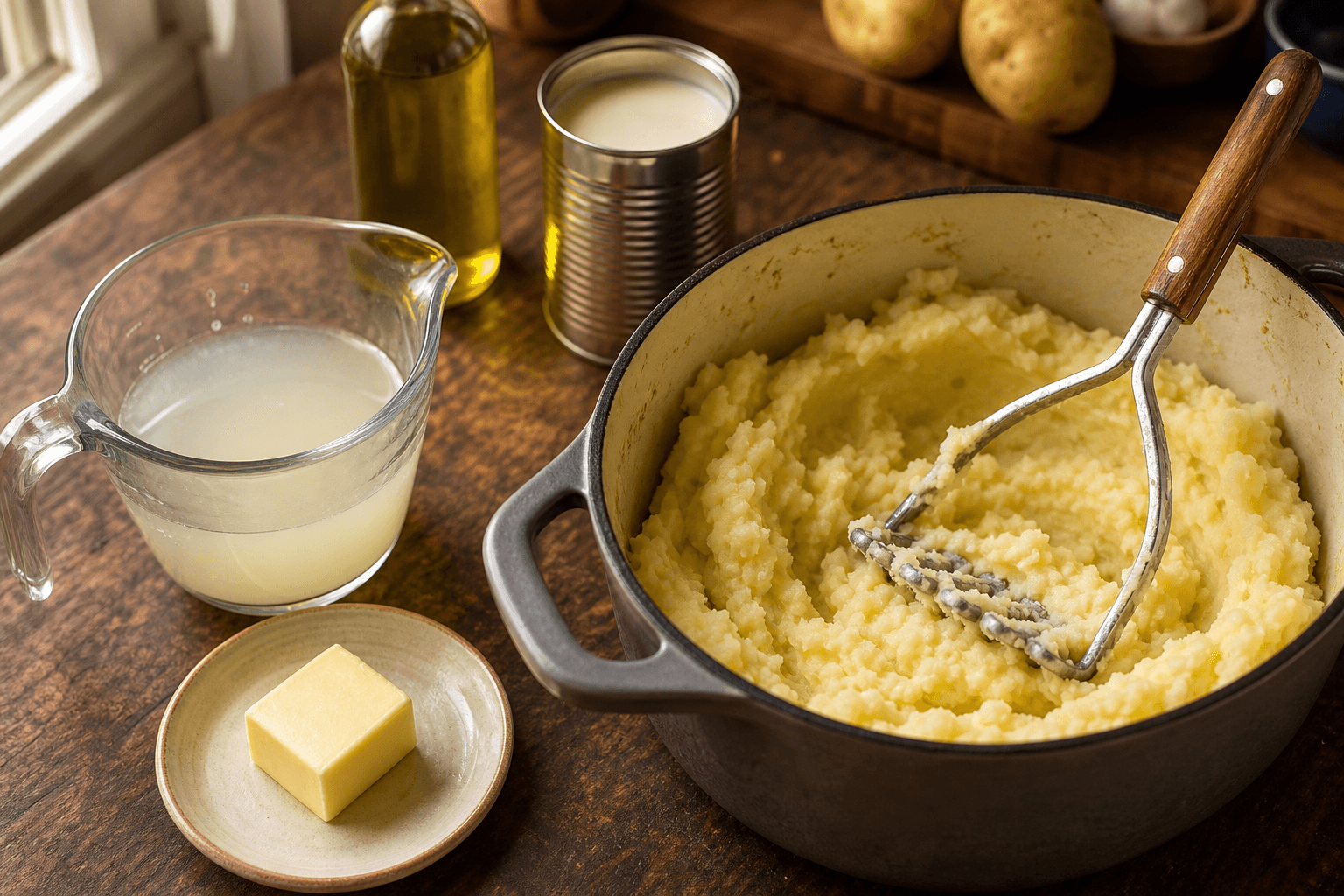
Save about 1 cup of the salted, starchy water your potatoes cooked in, then beat it back into the pot with butter: Purdue Extension's substitution list counts 1 cup of potato water as a straight replacement for 1 cup of milk. Warm broth, evaporated milk and olive oil all work too, so the choice comes down to what you already have open.
One step you cannot undo: reserve the water before you drain. Once it goes down the sink, the free option goes with it.
Milk substitutes for mashed potatoes
| Substitute | Ratio | Best for | Watch out |
|---|---|---|---|
| Reserved potato cooking water + butter | 1 cup potato water = 1 cup milk (Purdue/NDSU, in baking). Reserve about 1 cup, mash the butter in first, then add the water a little at a time | Any mashed potato, dairy-reduced or not | Salt the cooking water well. That seasoning does real work here. |
| Chicken or vegetable broth | Warm broth added gradually in place of the milk | Savory mash headed for gravy | Broth is already salted, so season at the end |
| Water + butter | 1 cup water + 1 1/2 tsp butter = 1 cup milk (Purdue/NDSU, in baking) | Butter in the fridge, no milk | Plain water alone tastes washed out. The butter is not optional. |
| Evaporated milk | 1/2 cup evaporated milk + 1/2 cup water = 1 cup whole milk, or undiluted for a richer mash | Holiday mashed potatoes | Warm it before it goes in |
| Olive oil + potato cooking water | Olive oil to taste, loosened with the starchy cooking water | Vegan and dairy-free mash | It needs the salted, starchy water to emulsify |
| Unsweetened plant milk, or full-fat canned coconut milk | 1:1 for dairy milk | Oat and soy are the most neutral | Unsweetened and unflavored only. Coconut milk tastes of coconut. |
| Sour cream, buttermilk or plain Greek yogurt | Stir in to taste, thinned with cooking water | Tangy mash, loaded mash | Add off the heat. Greek yogurt has about 11g fat per cup against sour cream's 40g and can break in a hot pot. |
How to make mashed potatoes without milk
- Salt the cooking water properly, because that water is about to become the liquid in your mash.
- Before draining, dip a heatproof cup into the pot and pull out about 1 cup of the cloudy water.
- Drain, then return the potatoes to the hot empty pot briefly so the surface steam cooks off.
- Mash the butter in first, while the potatoes are hot. Fat coats the starch before the liquid arrives.
- Add the reserved water a splash at a time, mashing between additions. You may not need the whole cup.
- Taste and season at the end. If you used broth, go light on the salt.
Use a hand masher or a ricer. A blender or food processor overworks potato starch and turns the mash into paste.
What changes when you skip the milk in mashed potatoes
The mash tastes cleaner and more like potato. Milk brings a mild sweetness and some body, so butter and salt carry more of the flavor without it, and you will probably want a little more of both.
Texture holds up better than people expect, because the starch suspended in the cooking water thickens the mash on its own. That is why the olive oil version works: the salted, starchy water emulsifies with the oil into something genuinely creamy, per the recipe developers at Family Style Food. Potato variety matters more than the liquid does. Yukon Golds have waxier, higher-moisture flesh than russets and mash creamier with less added fat.
When to leave the milk in mashed potatoes
Dairy fat gives you more margin on a make-ahead mash for a crowd. Potato-water mash tightens as it cools and wants another splash of warm liquid on the way to the table, so keep some cooking water back if you are holding it.
Skip the tangy swaps under a delicate sauce. Sour cream, buttermilk and Greek yogurt push the flavor sideways, which is great next to roast chicken and wrong under a cream sauce. And if the recipe is really a gratin or a piped duchesse potato, the dairy is structural rather than a moistener.
Caveats for mashed potatoes without milk
Warm whatever liquid you add. Cold liquid hitting hot potatoes makes them gluey and drops the serving temperature.
Only two rows above come from an extension service: 1 cup potato water for 1 cup milk, and 1 cup water plus 1 1/2 teaspoons butter for 1 cup milk, both from Purdue and NDSU, and both printed there as baking substitutions. How much of that cup a given pot of mash takes, and how much olive oil to pour, is technique guidance from recipe developers rather than a fixed conversion, so treat those as a starting point.
Going the dairy route with what is already in the fridge? Check dates first. USDA puts sour cream at about 1 to 3 weeks refrigerated, buttermilk at about 2 weeks and yogurt at 1 to 2 weeks.
Related dairy swaps beyond mashed potatoes
Neighboring gaps in the fridge: buttermilk substitute, milk and butter as a heavy cream substitute, Greek yogurt instead of sour cream, dairy-free substitutes for sour cream, and the printable ingredient substitution chart for the fridge door.
FAQ about mashed potatoes without milk
What can I use instead of milk in mashed potatoes?
The potato cooking water, plus butter. Purdue Extension lists 1 cup of potato water as a substitute for 1 cup of milk.
Can I use water in mashed potatoes?
Yes, and starchy cooking water beats plain tap water by a wide margin. With plain water, add 1 1/2 teaspoons of butter per cup to make up for the fat.
Can I use chicken broth in mashed potatoes?
Yes. Warm it first and hold back on the salt, since broth is already seasoned.
How do I make dairy-free mashed potatoes creamy?
Olive oil, loosened with the salted, starchy cooking water. The two emulsify into a mash that eats as creamy as a dairy one. Reach for Yukon Golds over russets while you are at it.
Why did my mashed potatoes turn gluey?
Overworked starch, usually from a blender or food processor, or from cold liquid. A masher or ricer plus warm liquid fixes it next time.
Keep track of what you have before mashed potato night
Well Stockd's substitution engine suggests swaps from what is already on your shelves when a recipe calls for something you are out of. Frozen and canned forms count, and you can reject any swap you do not want offered again. If the milk runs out often, the app to track food expiration dates and pantry inventory app guides cover the tracking side.
Sources: Purdue Extension / NDSU Extension FN198, Family Style Food, olive oil mashed potatoes, America's Test Kitchen on Greek yogurt for sour cream, USDA FSIS on dairy storage times.
Track it in Well Stockd
Add what you have, see what you can cook tonight, and get a reminder before anything goes off.
