Meal train ideas: 30 dinners that travel and reheat well
A list of 30 meal train dinners that travel and reheat well, grouped by situation (a new baby, surgery or illness, a loss, a big family, vegetarian, no time to cook), with what to put on a meal train sign-up, how to carry the food safely and what to do when your own food budget is tiny.
Good meal train ideas are dinners that survive a car ride and reheat in one step: baked pasta, casseroles, soups and stews, chili or curry with rice, enchiladas, and roast chicken with sides. Match the dish to the situation: freezer-friendly food for a new baby, soft and mild food after surgery, comfort food after a loss.
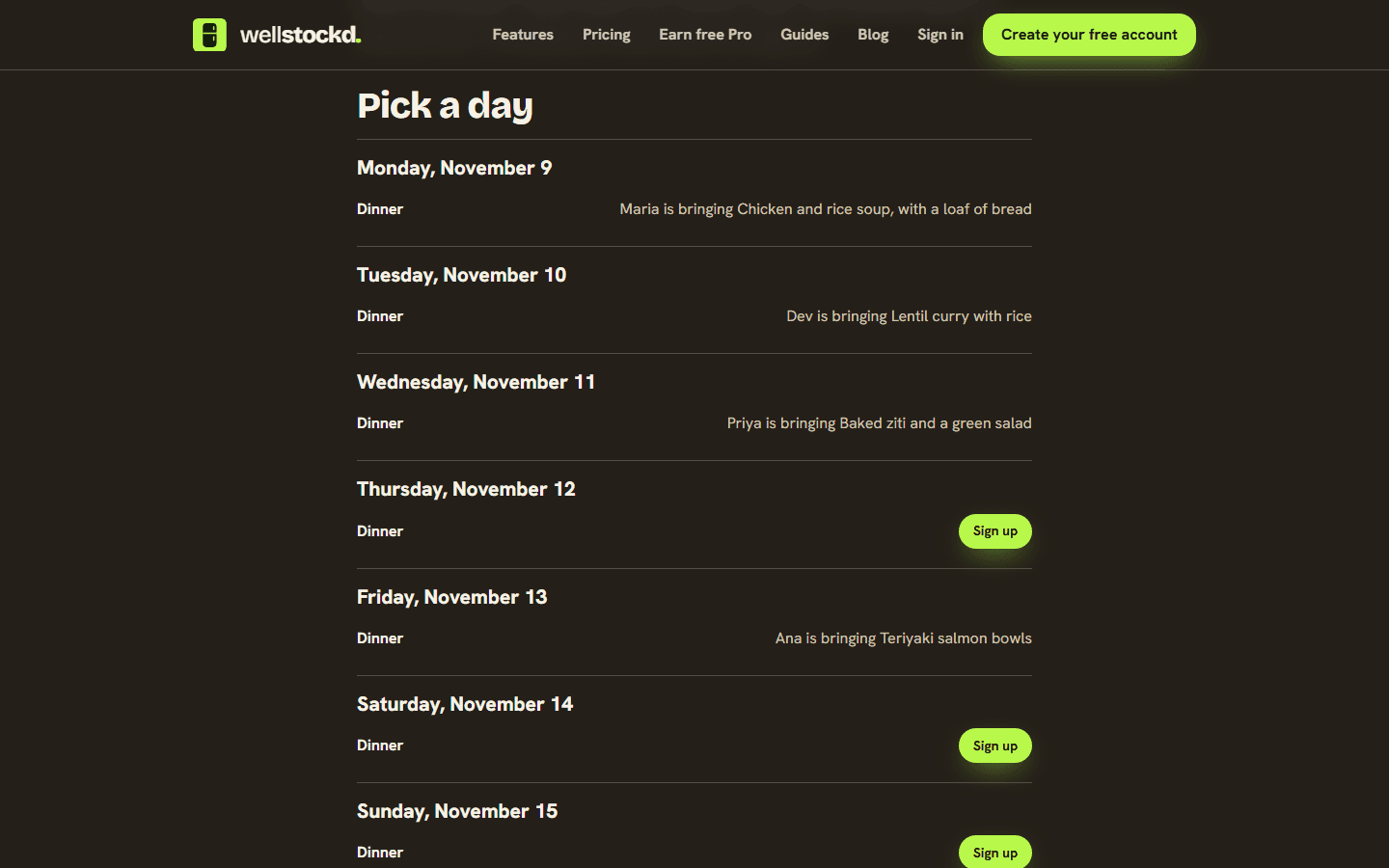
Below are 30 dinners grouped by the situation they suit, each with a line on why it works. If you're the one organizing, Well Stockd's free meal train sign-up sheet lets friends claim a day, shows them the family's dietary notes before they pick one, and can email each cook a reminder the day before.
What are good meals to make for a meal train?
The dinners that work best share a few traits. They travel without spilling, they reheat in an oven or a microwave without extra steps, they can wait a day in the fridge, and they suit everyone at the table, children included. Mild beats spicy, because you can send hot sauce on the side. A one-pan dish beats anything that has to be assembled at the last minute.
Cook for the number of people the organizer lists, then add a portion or two. Leftovers give the family a lunch the next day, which is one less thing for them to think about.
30 meal train ideas, sorted by situation
For a new baby: dinners that freeze
New parents may be eating at odd hours, with one hand. These dishes freeze well, so the family can save one for a night nobody signed up for. If you want to stock several at once, freezer dump meals can be assembled in one session and cooked later.
| Dish | Why it works |
|---|---|
| Baked ziti | Freezes and reheats in the pan it came in |
| Chicken enchiladas | Easy to portion, with toppings on the side |
| Turkey or bean chili | Eaten from a mug with one hand |
| Lasagna | One pan can cover two dinners |
| Meatballs in tomato sauce | Goes with pasta one night and rolls the next |
| Breakfast burritos | Wrapped one by one and heated in the microwave |
After surgery or during an illness: soft and mild
Ask what they can eat before you cook, because some people come home with eating instructions from their care team. These are gentle choices to offer once you know.
| Dish | Why it works |
|---|---|
| Chicken and rice soup | Easy to sip and easy to reheat a bowl at a time |
| Macaroni and cheese | Soft and familiar |
| Shepherd's pie | Soft and filling, all in one dish |
| Lentil soup | Filling without being heavy |
| Roast chicken with mashed potatoes | A plain main with a soft side |
| Baked oatmeal | Breakfast that reheats by the slice |
After a loss: food that feeds visitors
A grieving household may fill with relatives. Food that can be served in pieces over a long afternoon helps more than one elaborate dinner.
| Dish | Why it works |
|---|---|
| Pulled pork with buns | Feeds a crowd, and people serve themselves |
| Baked ham, sliced | Dinner tonight, sandwiches tomorrow |
| Chicken pot pie | Comfort food in one dish |
| Vegetable soup with a loaf of bread | Reheats a bowl at a time |
| Roasted chicken thighs and vegetables on one tray | Simple and filling |
| Banana bread or a pan of brownies | Something sweet to offer visitors |
Food that sits out while people come and go needs watching. Anything perishable should go back in the fridge within 2 hours, or 1 hour when it's above 90°F, according to USDA's Food Safety and Inspection Service (FSIS danger zone guidance).
For a big family or picky kids
| Dish | Why it works |
|---|---|
| Taco kit: seasoned meat, tortillas and toppings packed separately | Everyone builds their own |
| Spaghetti and meatballs | Familiar to children |
| Sloppy joes | Quick to heat and easy to eat |
| Baked chicken drumsticks with rice | Plain enough for kids, filling for adults |
| Cheesy chicken, broccoli and rice bake | One pan, mild flavors |
Vegetarian and lighter dinners
| Dish | Why it works |
|---|---|
| Black bean enchiladas | Filling, and they freeze well |
| Vegetable curry with rice | Reheats well; keep the heat mild |
| Stuffed peppers with rice and beans | One per person, so it's easy to portion |
| Minestrone | Vegetables, beans and pasta in one pot |
When you can't cook
| Idea | Why it works |
|---|---|
| Rotisserie chicken, bagged salad and dinner rolls | A complete dinner from one stop at the store |
| Takeout from a place the family likes | Ask first, then time the order for the drop-off window |
| A grocery delivery of their usual staples | Covers breakfasts and lunches too |
What to put on a meal train?
If you're signing up, put down exactly what you'll bring, such as "chicken enchiladas, rice and a green salad," so the next person can choose something different. That's how a family avoids four lasagnas in one week.
If you're organizing, put down everything a cook needs before choosing a day:
- the dates and the time window for drop-off
- how many adults and children are eating
- allergies, and how serious each one is
- foods they avoid, love or would rather skip
- drop-off notes, such as "cooler on the porch, text when it's there"
- whether they'd like some meals frozen for later
On Well Stockd's sheet, volunteers see those notes before they choose a date. The family's address is shown only to people who sign up, in their confirmation and in the reminder.
Pack it so it travels
Meal train food has to survive the car ride, so pack for the trip:
- Use disposable pans or containers the family can keep, so nothing has to be washed and returned.
- Label each dish with what it is, the date you made it, the main allergens and how to reheat it.
- Keep hot food at 140°F or above and cold food at 40°F or below on the way. FSIS calls the range between them the danger zone, where bacteria grow fastest.
- Write the reheating step on the label. Leftovers and casseroles should reach 165°F inside (FSIS safe temperature chart).
If the family won't eat it that night, a dish delivered cold is easier on them than one delivered hot: it goes straight into the fridge, and cooked leftovers keep 3 to 4 days there (FSIS leftovers guidance). For dishes that taste good on day two and three, these leftover-friendly meal ideas are a good place to look.
How to survive on $20 a week for food?
It's hard, and the official numbers show why. USDA's thrifty food plan, the lowest-cost of its four plans for a healthy diet cooked at home, comes to $58.60 a week for a woman aged 20 to 50 and $73.60 for a man of that age in September 2026, and USDA suggests adding 20% for someone who lives alone (USDA food plans). Twenty dollars is less than half of either figure.
If that's your budget right now:
- See whether you qualify for SNAP, the federal food benefit, and look up a pantry near you with Feeding America's food bank finder.
- Build meals on low-cost staples: dried beans and lentils, rice, oats, pasta, eggs, potatoes, cabbage, carrots, bananas and frozen vegetables.
- Cook one big pot, such as beans and rice or lentil soup, eat it over several days, and freeze a few portions so you don't tire of it.
- Start from what's already in the cupboard. These meals made from random ingredients show how far a few odds and ends can go.
If money is tight and you still want to help a family on a meal train, a pot of bean chili or a tray of baked pasta costs little and feeds everyone well.
More meal train questions
How much food should a meal train dinner be?
Enough for everyone on the sign-up to have a full plate, plus a portion or two for lunch the next day. If the notes say two adults and three children, cook as you would for six.
Should I bring a meal train dinner hot or cold?
Ask the organizer. Hot works when you arrive right at dinnertime and the family eats straight away. Cold is easier when they might eat later: they put it in the fridge and reheat it when they're ready. Either way, tape the reheating steps to the lid.
Start the sign-up sheet
Once you know what to cook, the next job is spreading the dinners out, so the family isn't buried in food on day one and empty-handed on day ten. Well Stockd's meal train sign-up is free for the organizer, the volunteers and the family, and volunteers don't need an account. Each day on the sheet shows who is bringing what, the dish ideas on the page follow the dietary needs the organizer picks, and each cook can get an email reminder the day before.