Celery substitute for chicken salad: 1:1 swaps that work
The ratios for every celery substitute in chicken salad: water chestnuts and five other 1:1 swaps, how much celery seed replaces fresh celery, and how long the salad keeps once it is mixed.
Water chestnuts are the closest stand-in for celery in chicken salad, and they go in 1:1 by volume: half a cup of sliced water chestnuts for half a cup of diced celery, sliced 1/8 to 1/4 inch thick. Tasting Table publishes that ratio, and it is the only celery swap with a published 1:1 figure behind it. Fennel bulb, jicama, seeded cucumber, diced apple and finely diced bell pepper also work at 1:1. If it is the flavor you want back and not the crunch, use about 1/2 teaspoon of celery seed per pound of cooked chicken.
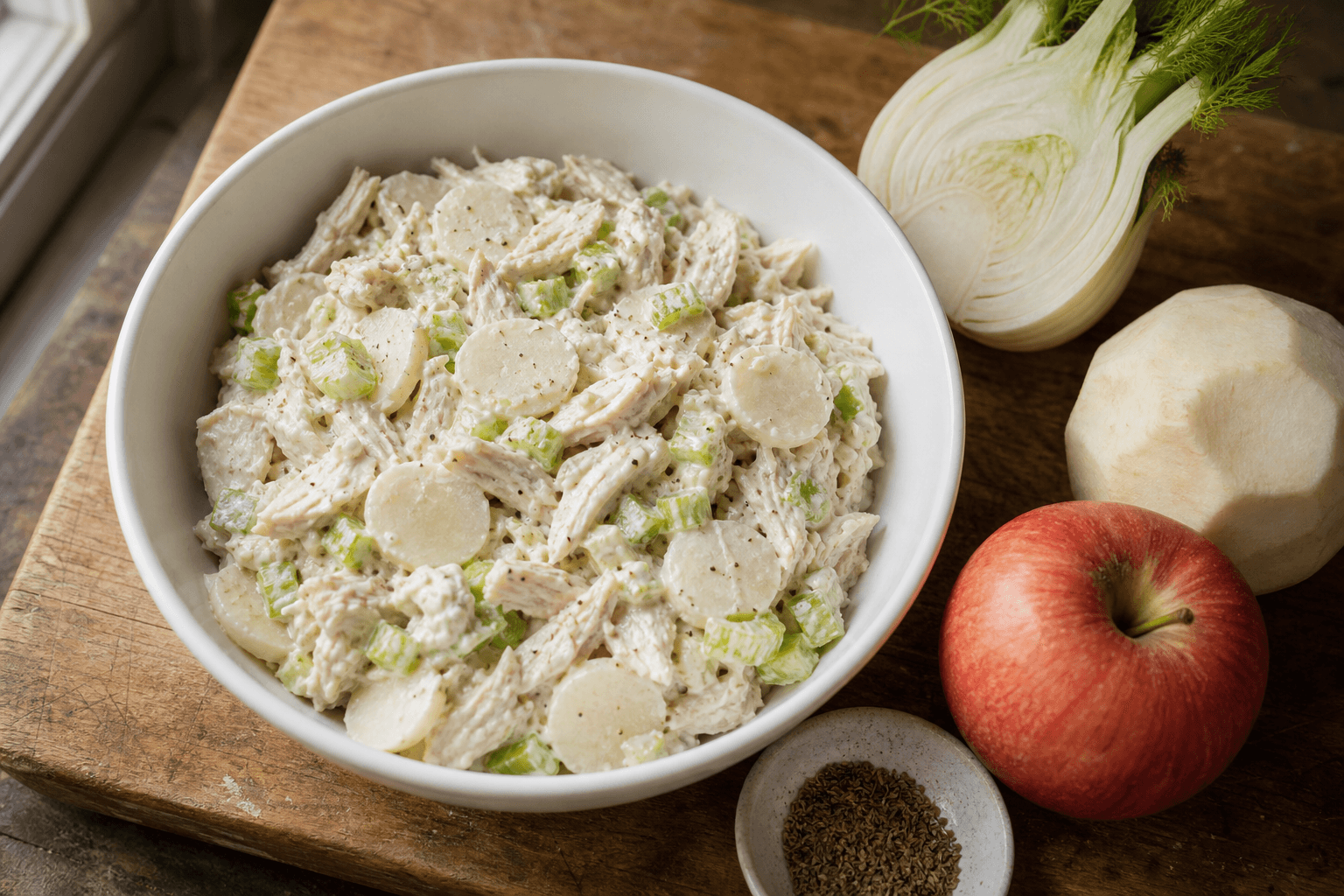
| Substitute | Ratio | Best for | Watch out |
|---|---|---|---|
| Water chestnuts | 1:1 by volume (1/2 cup for 1/2 cup) | Chicken, tuna, egg salad | Rinse canned ones; keep them raw |
| Fennel bulb or stalks | 1:1 by volume, diced or thin sliced | Chicken salad, slaw | Light anise flavor |
| Jicama | 1:1 by volume, diced small | Chicken salad, slaws | Sweet and wet; lime keeps it bright |
| Cucumber | 1:1 by volume, seeded and diced | A fresher chicken salad | Releases water; salt and drain it |
| Diced apple | 1:1 by volume | Waldorf style chicken salad | Sweetens the bowl; ease off the grapes |
| Red onion | Half a small onion per batch, diced | Savory chicken salad | Brings its own strong flavor |
| Bell pepper | 1:1 by volume, diced small | Chicken salad, pasta salad | Softer than celery |
| Celery seed | About 1/2 tsp per 1 lb cooked chicken | Celery flavor, no celery in the house | Tastes hot, like horseradish |
| Celery salt | Roughly 1 part celery seed to 2 parts salt | When the celery seed is gone too | Two thirds of the spoon is salt |
| Celery leaves | Not 1:1. A little, used as an herb | Celery depth in the dressing | Much more bitter than stalks |
How to swap celery in chicken salad
- Measure by volume. Whatever the recipe asks for in celery, measure the same amount of the substitute.
- Cut to celery size. Tasting Table puts water chestnuts at 1/8 to 1/4 inch slices. Dice the fennel, jicama, cucumber, apple or bell pepper to about that.
- Rinse canned water chestnuts under cold water and leave them raw. Cooking them costs you the crunch you swapped in for.
- Deal with the water. Seed the cucumber, or salt the dice and drain it before it goes in the bowl. Water chestnuts and fennel do not leak.
- Season last. Stir celery seed into the dressing rather than over the chicken, and start with a pinch. If you reached for celery salt instead, cut the salt elsewhere in the recipe.
What changes when you leave celery out of chicken salad
Celery gives a salad a clean snap plus a faint green, slightly salty flavor. Water chestnuts and jicama cover the snap and bring almost no flavor with them, so the dressing does more of the talking. Fennel covers the snap and adds a soft anise note. The Kitchn calls fennel stalks possibly the best celery substitute, which makes fennel the one to reach for when you want a fresh vegetable rather than something out of a can. Cucumber softens by day two, apple sweetens the bowl, and red onion changes the salad on purpose.
Water content is the practical difference here. Cucumber and jicama release liquid as they sit; water chestnuts and fennel do not. If the salad is for tomorrow's lunch, pick one of the dry two.
When not to substitute celery in chicken salad
Do not swap celery leaves for stalks one for one. America's Test Kitchen tested equal volumes of minced leaves in place of stalks and found the leaves much more intense and bitter, enough to make dishes taste medicinal. Mince a little and treat it like parsley instead.
Do not reach for celery salt without editing the recipe. Celery salt runs about one part celery seed to two parts salt, so most of what lands in the bowl is salt, and that is the most common way chicken salad gets oversalted.
If you are substituting because of a celery allergy, remember that celery seed and celery salt are still celery. Celery is a declared allergen in Europe, though not one of the nine major allergens in the United States.
How long chicken salad keeps after you swap the celery
Chicken salad keeps 3 to 4 days in the refrigerator at 40F or below, per the USDA FoodKeeper data published on FoodSafety.gov, and it does not freeze well. University of Minnesota Extension lists the same 3 to 4 days for homemade and store-made chicken, tuna and egg salads. A drier, crunchier vegetable does not extend that window.
Cooked chicken is good for 3 to 4 days on its own, so if the salad came from Sunday's roast chicken, the countdown started when the chicken came out of the oven. A food expiration tracking app keeps that first date attached to the leftovers.
More substitution guides beyond celery
Keep the printable ingredient substitution chart on the fridge for the ratios you look up most. Read the onion substitute guide before you trade the red onion here for something milder. If your crunchy vegetable is canned or frozen rather than fresh, the fresh, frozen and canned substitution ratios cover how the amounts change.
Questions about celery substitutes in chicken salad
What can I use instead of celery in chicken salad?
Water chestnuts, one for one. Swap half a cup for half a cup, sliced 1/8 to 1/4 inch thick. Fennel bulb, jicama, seeded cucumber, diced apple and bell pepper also work at 1:1.
How much celery seed replaces fresh celery in chicken salad?
About 1/2 teaspoon of celery seed per pound of cooked chicken, or 1/2 teaspoon for every 2 tablespoons of minced celery tops. Celery seed tastes hot in quantity, so start with a pinch.
Can I use celery salt instead of celery in chicken salad?
Yes, with one adjustment. Celery salt is roughly one part celery seed to two parts salt, so cut the salt in the rest of the recipe or the salad will be too salty to eat.
Can I use celery leaves instead of celery stalks in chicken salad?
Not one for one. America's Test Kitchen found celery leaves much more intense and bitter than the stalks, and dishes made that way tasted medicinal. Use a little as an herb.
When you are out of celery and out of ideas
Well Stockd tracks what is in your kitchen, and its substitution engine suggests swaps from what you already have when a recipe calls for something you are out of. Frozen and canned forms count, so a can of water chestnuts on the shelf turns up as an option, and you can reject any suggestion you do not want.
Sources: Tasting Table (water chestnuts), The Kitchn (fennel), The Kitchn (celery swaps), Tasting Table (celery seed), The Kitchn (1/2 tsp celery seed per pound of chicken), The Spice House (celery tops to celery seed), Tasting Table (celery salt), Tasting Table (red onion), America's Test Kitchen (celery leaves), FoodSafety.gov, University of Minnesota Extension.