Substitute for heavy cream in soup: evaporated milk
Six heavy cream substitutes for soup with exact ratios, from evaporated milk at 1:1 to the Purdue and NDSU Extension milk-and-butter formula, plus how to temper dairy so it does not curdle.
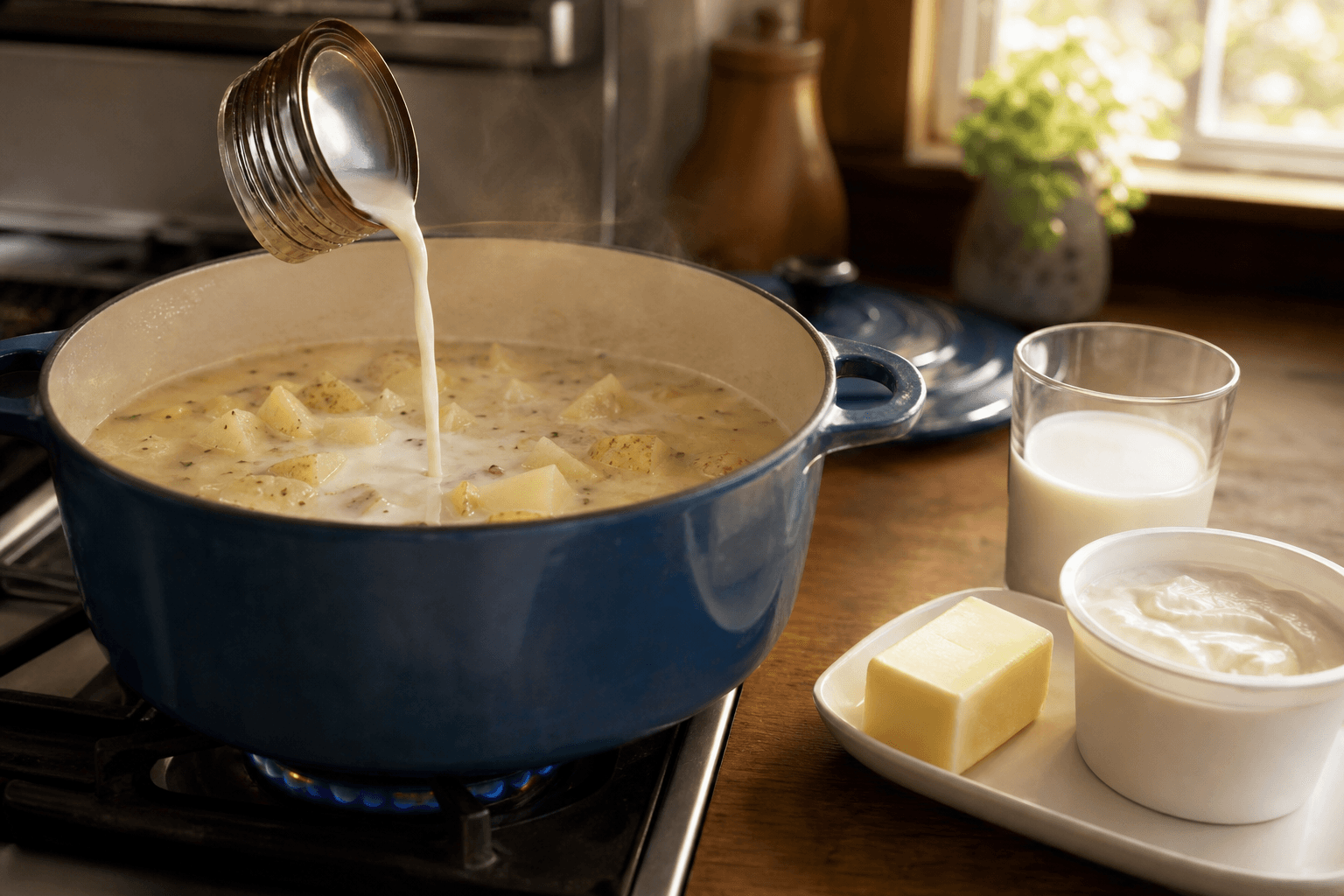
Use evaporated milk 1:1 for heavy cream in soup. The water is already cooked out, so it takes heat better than anything else in the pantry. Stir it in at the end, with the pot at a simmer instead of a boil. If fresh milk is all you have, whisk 3/4 cup of it with 1/3 cup of melted butter per cup of cream.
That butter matters: heavy cream is legally cream with at least 36 percent milkfat (FDA, 21 CFR 131.150), and that fat is what keeps it from breaking in a hot pot. Every swap below either matches it or works around it.
Heavy cream substitutes for soup, with ratios
| Substitute | Ratio | Best for | Watch out |
|---|---|---|---|
| Evaporated milk | 1 cup = 1 cup heavy cream | Chowders, potato soup, bisques, slow-cooker soups | Warm it to room temperature. Cold dairy in very hot soup separates. Adds a cooked-caramel note. |
| Milk plus melted butter | 3/4 cup milk + 1/3 cup melted butter = 1 cup cream | Soups where cream adds richness, not thickness | The fat is not emulsified as it is in cream, so it can bead on top. Whisk hard. |
| Half-and-half plus melted butter | 7/8 cup half-and-half + 1/8 cup melted butter = 1 cup cream | Smooth pureed soups at lower fat | Half-and-half runs 10.5 to 18 percent milkfat and curdles readily alone. The butter buys back stability. |
| Sour cream or full-fat Greek yogurt | 1:1, tempered, plus 1 Tbsp cornstarch per cup of yogurt | Borscht, mushroom soup, tomato soup, goulash | About 11g of fat per cup against sour cream's 40g, so yogurt breaks in hot liquid. |
| Full-fat canned coconut milk or coconut cream | 1:1 | Curried soups, squash soups, Thai-style broths | Real coconut flavor, either the point or a problem. |
| Whole milk plus a starch slurry | 1 cup whole milk + 1 Tbsp cornstarch or 2 Tbsp flour, whisked into cold liquid | Lightening a soup on purpose | The starch thickens, but you lose cream's mouthfeel. |
The milk-and-butter ratio comes from Purdue and NDSU Extension's FN198 sheet. You will also see 3/4 cup milk plus 1/4 cup butter online. That lighter version works, but 1/3 cup lands closer to cream's 36 percent milkfat.
One more route uses no dairy: blend some of the soup. Puree cooked potato, white beans or cauliflower from the pot and stir it back in. Soaked cashews work too. It is a technique, not a fixed ratio.
How to swap evaporated milk for heavy cream in soup
- Finish the soup first: cook the vegetables through, season, and blend if you plan to.
- Let the can sit out while the soup cooks so it goes in at room temperature.
- Take the pot to a bare simmer, or off the burner.
- Temper it. Ladle a few spoonfuls of hot soup into the measuring cup, whisk, then pour that back in.
- Keep it below a boil, and reheat leftovers gently too.
Milk plus butter goes the same way: melt the butter and whisk it into the milk first.
What changes when you skip the heavy cream
Evaporated milk brings a cooked-caramel note that reads as sweetness in corn chowder and disappears under bacon or chili. Milk and butter tastes right but can bead on the surface if the pot gets away from you. Sour cream and Greek yogurt add tang, which suits borscht and fights a delicate leek soup. A starch slurry gives body without the fat, and you taste the difference.
Keep real cream for soups that hold dairy over long heat or carry a lot of acid. A tomato soup simmering after the dairy goes in will punish 10.5 percent half-and-half in a way it never punishes 36 percent cream.
When heavy cream substitutes curdle, and how to store them
Heat and acid together break dairy. Tomato, wine, lemon and vinegar soups are the risky ones, and they are where tempering earns its keep. Boiling after the dairy goes in breaks more cream soups than anything else.
Fat is the stabilizer, so the leaner the substitute, the more care it needs. That is why 36 percent cream forgives you and skim milk does not.
USDA FSIS gives sour cream about 1 to 3 weeks in the fridge, buttermilk about 2 weeks and yogurt 1 to 2 weeks. Do not freeze sour cream for later soup duty: the National Center for Home Food Preservation says it separates on thawing and will not blend back acceptably.
Other swaps to know besides heavy cream
Out of cream usually means out of something else too. Our buttermilk substitute guide covers the milk-plus-acid trick, and the printable ingredient substitution chart puts these ratios on one cabinet-door page. For produce, see fresh vs frozen vs canned substitution ratios and the fresh to dried herb conversion chart.
Heavy cream substitute questions
What is the best heavy cream substitute for soup?
Evaporated milk, 1:1. A can sits shelf stable in the cupboard until you need it, and it holds up to simmering better than fresh milk.
Will milk curdle if I use it instead of heavy cream in soup?
It can, especially in an acidic soup or if the pot boils after the milk goes in. Temper it, hold a simmer, and you will usually be fine.
Can I use Greek yogurt instead of heavy cream in hot soup?
Yes, on two conditions: temper it, and stir 1 tablespoon of cornstarch into each cup first. America's Test Kitchen watched Greek yogurt break in hot stroganoff sauce. The reason is fat, roughly 11g per cup against sour cream's 40g.
How do I fix soup that curdled after the heavy cream substitute went in?
Blend it smooth with an immersion blender. The texture will not be perfect, but it is usually good enough to serve and still safe to eat.
Cook around the missing carton of heavy cream
Well Stockd tracks what is in your kitchen, and its substitution engine suggests swaps from what you already own when a recipe calls for something you are out of. Frozen and canned forms count, and you can reject any swap you do not want offered again. Our guide to the app to track food expiration dates covers dates, and the best pantry inventory app comparison lines up your options.
Sources: FDA 131.150 | eCFR Part 131 | Purdue/NDSU FN198 | America's Test Kitchen | USDA FSIS | NCHFP