How much money does a family of four waste on groceries per year?
A 2025 EPA analysis pegs the real number at $2,913 a year for a family of four, nearly double the outdated $1,500 figure still making the rounds. This breaks down where that money goes by food category, plus a simple way to find your own household's number.
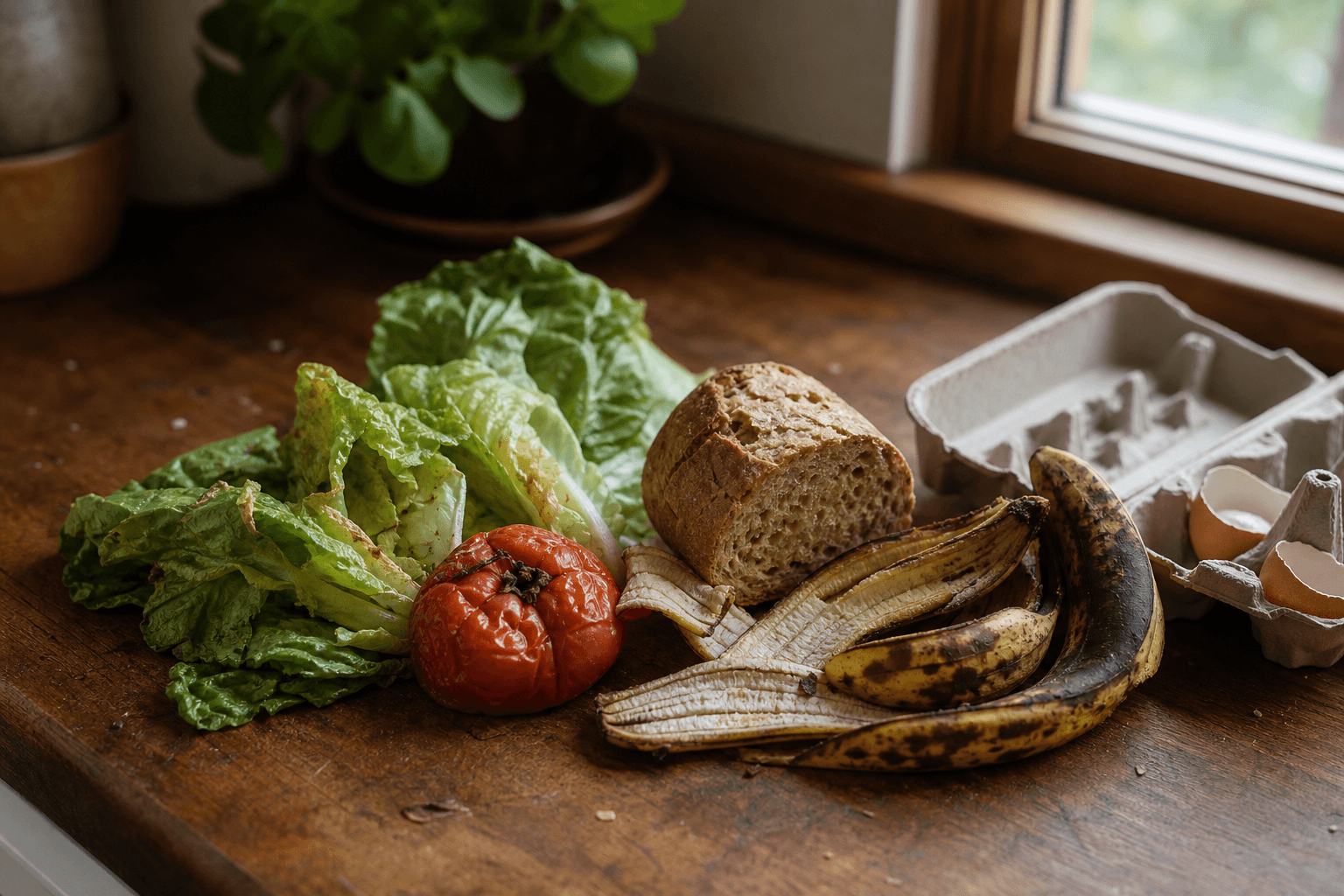
The average family of four wastes about $2,913 a year on food that never gets eaten, or roughly $56 a week, per a 2025 EPA analysis using current grocery prices. The old $1,500 figure still floating around is based on 2010 prices and understates today's real cost.
How much does a family of four waste on groceries?
That $2,913 number comes from the Environmental Protection Agency's April 2025 report on the cost of food waste, which combined USDA food availability data with current grocery prices to work out what Americans throw away and what it's worth. Per person, the EPA puts the figure at $728 a year, or $14 a week. Scale that to four people and you land on $2,913 a year, about $56 every week, in food that gets bought and then thrown away.
For context, a four-person household spends roughly $27,477 a year on food total, counting groceries and meals out. That means the food you never eat eats up about 11 percent of your entire food budget. Nationally, over a third of the food available in the United States is never eaten at all.
You've probably seen the older, more dramatic-sounding "$1,500 a year" statistic in a city recycling campaign or a news segment. That number is real, it's just old. It comes from a 2014 USDA analysis built on 2010 grocery prices, and food prices have climbed more than 50 percent since then. Waste the same amount of food today and it costs you nearly double.
Household size scales the math directly, since the EPA's estimate is a per-person cost:
| Household size | Weekly cost of waste | Monthly cost of waste | Yearly cost of waste |
|---|---|---|---|
| 1 person | $14 | $61 | $728 |
| 2 people | $28 | $121 | $1,456 |
| 3 people | $42 | $182 | $2,184 |
| 4 people (average family) | $56 | $243 | $2,913 |
| 6 people | $84 | $364 | $4,369 |
Where does that $2,913 go?
Not every food loses the same amount of money when it's wasted. Meat is thrown away in smaller quantities than, say, sugar or produce, but it costs so much more per pound that it ends up as the single biggest source of wasted grocery money for a typical family of four.
| Category | Pounds wasted per year (family of four) | Cost per year (family of four) |
|---|---|---|
| Meat | 102 lbs | $534 |
| Other dairy (cheese, yogurt, sour cream) | 71 lbs | $297 |
| Processed fruit | 27 lbs | $263 |
| Fish and seafood | 20 lbs | $245 |
| Fresh vegetables | 124 lbs | $238 |
| Added sugar and sweeteners | 148 lbs | $231 |
| Poultry | 56 lbs | $223 |
| Fresh fruit | 90 lbs | $178 |
| Grain products (bread, pasta, cereal) | 124 lbs | $170 |
| Processed vegetables | 64 lbs | $157 |
| Added fats and oils | 59 lbs | $151 |
| Fluid milk | 106 lbs | $103 |
| Eggs | 27 lbs | $80 |
| Tree nuts and peanuts | 5 lbs | $41 |
| Total | about 1,025 lbs | about $2,913 |
Two things stand out here. First, meat and dairy, the priciest categories per pound, are also where a little bit of spoilage does the most damage to your budget. Second, fresh vegetables and sugar are wasted in the largest volume by weight, which lines up with how quickly produce wilts and how much sugar hides in sauces, dressings, and baked goods that never get finished.
What's a simple way to find out what your own household wastes?
National averages are a useful gut check, but your own kitchen is the real evidence. A one-week audit gives you a number that's yours.
- Grab a notepad, a jar, or a notes app and keep it by the trash can and the fridge for seven days.
- Every time you toss food, whether it's spoiled leftovers, wilted produce, or expired dairy, jot down what it was and roughly what it cost.
- Before your next grocery trip, do a five-minute sweep of the fridge, freezer, and pantry so you're shopping around what you already have rather than on top of it.
- Add up the week's total, then multiply by 52 for a rough annual estimate.
- Compare that number to your total yearly grocery spending to see what share of your food budget is actually going in the trash.
Most families are surprised by how close their own number lands to the EPA's $2,913 average, and by how much of it comes from just two or three repeat offenders.
What habits drain that money the fastest?
A handful of everyday patterns account for most of the loss:
- Buying groceries without checking what's already in the fridge or pantry, which leads to duplicate purchases that pile up and expire unused.
- Cooked leftovers that get pushed to the back of a shelf and forgotten until they're no longer safe to eat.
- Bulk or family-size deals that outlast how quickly a household of four can eat them.
- Portion sizes at the stove that are bigger than what people finish at the table.
- Date labels read as hard deadlines rather than the manufacturer's quality guess, which sends still-good food to the trash early.
If any of that sounds familiar, our guide on how to stop throwing away food from the fridge walks through fixes for the leftovers problem specifically, and how to stop wasting groceries before they go bad tackles the produce and dairy side of the equation.
What shrinks the number?
The single biggest lever is knowing what you already have before you shop or cook. Food waste is rarely one big loss. It usually builds up slowly, from small purchases nobody tracked. A running list of what's in your fridge, freezer, and pantry, with expiration dates attached, turns "I think we have chicken somewhere" into an actual answer, and that alone heads off a lot of duplicate buying.
That's the idea behind Well Stockd, a pantry inventory app built to reduce food waste. It tracks what's on hand, flags what's close to expiring, and suggests recipes you can already make with what you've got.
It won't fix every habit on the list above, but it removes a lot of the guessing that causes them.
For the fuller picture on cutting waste across your whole kitchen, not just one category, see our main guide on how to stop wasting food at home.
Frequently asked questions
Is the $1,500-a-year figure for food waste still accurate? No. That number is based on 2010 grocery prices from a 2014 USDA study. Food prices have risen more than 50 percent since then, so a 2025 EPA analysis puts the real cost for a family of four closer to $2,913 a year.
Which foods cost a family the most money when they're wasted? Meat tops the list at roughly $534 a year for a family of four, followed by other dairy, processed fruit, and fish and seafood. These categories cost the most per pound, so even small amounts of spoilage add up fast.
Does cutting food waste save meaningful money? Yes. If a typical family of four cut its food waste in half, that puts more than $1,400 a year back in the budget, close to three weeks' worth of that family's entire food spending, groceries and meals out combined.
Sources: EPA, Estimating the Cost of Food Waste to American Consumers (April 2025), USDA, Food Loss and Waste