How to meal plan for one person on a budget
A step-by-step method for meal planning as a household of one, plus a sample week of dinners that reuse the same ingredients and average about $2 each.
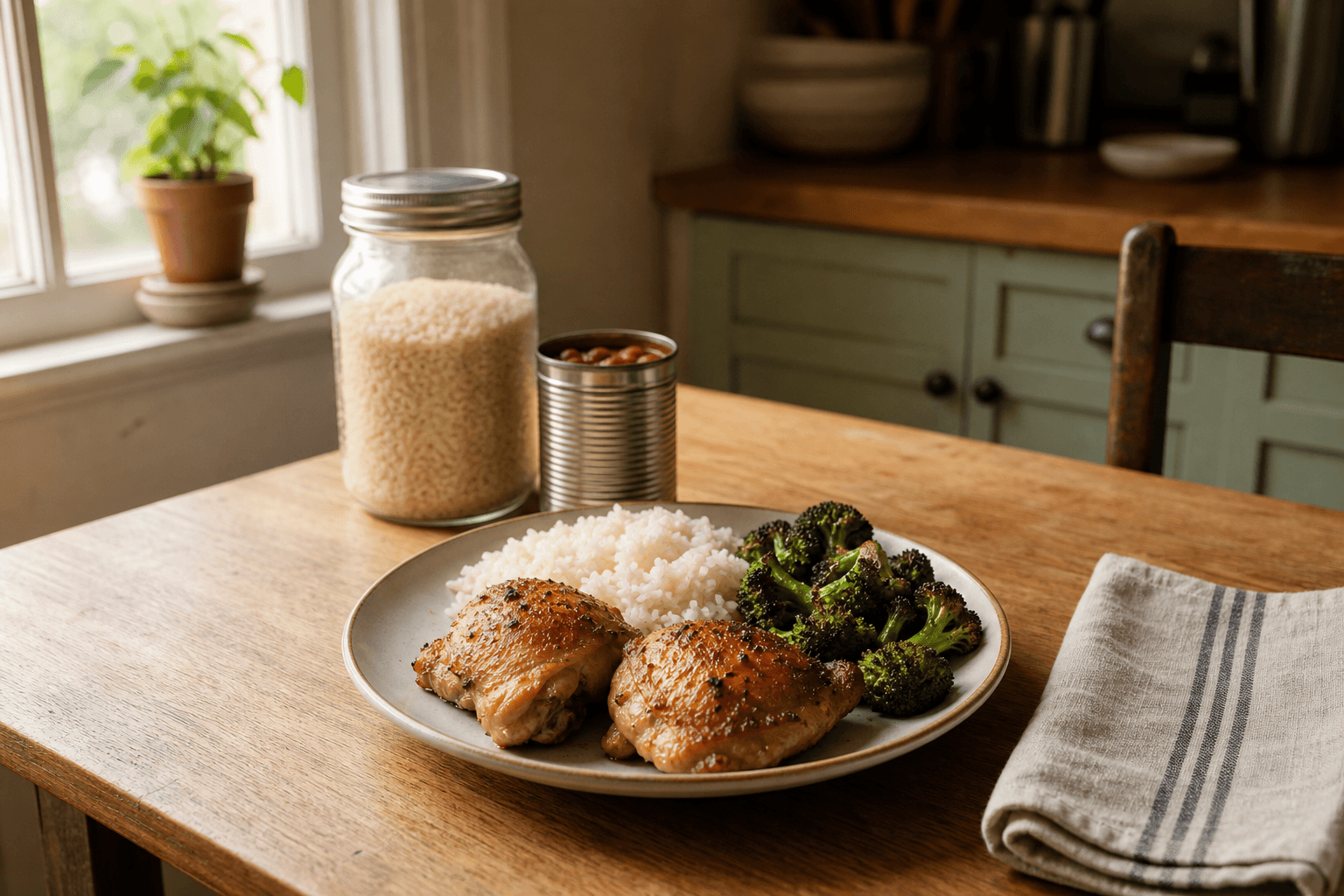
Meal planning for one person on a budget means choosing 3 to 4 recipes a week that share ingredients, buying only what you need, and stretching leftovers into a second meal. Most solo cooks eat well on $40 to $70 a week by shopping a short list and using what they already have before adding anything new.
Why meal planning for one feels harder than it should
Recipes are written for four. Produce comes in bags built for a family. A bulk pack of chicken thighs looks like a bargain until half of it turns gray in the back of the fridge. None of that is a personal failing, it is just math working against you. The fix is not eating differently from everyone else, it is scaling the same weekly planning process down on purpose. If you have not built a basic weekly routine yet, start with how to meal plan for the week for the full process, then use this guide to adjust it for a household of one.
What's a realistic weekly grocery budget for one person?
The USDA's Thrifty Food Plan, the baseline used to calculate SNAP benefits, puts monthly grocery costs for a single adult in the neighborhood of $250 to $360 depending on age and sex, or roughly $60 to $85 a week. That figure assumes cooking almost everything from scratch. In practice, a solo cook who plans around sales, canned staples, and frozen produce can often land lower, closer to $40 to $70 a week, especially once a pantry has a few staples already stocked. Use the government figure as a ceiling, not a target, and treat anything below it as a plan that is working.
How to meal plan for one person, step by step
- Set your weekly number first. Decide on a dollar figure before you open a recipe site. $50 a week is a workable starting point for one person; adjust up or down after a couple of weeks of tracking receipts.
- Check the fridge and pantry before you plan anything. Write down what is already open and needs using, half a bag of spinach, the last two eggs, a container of rice. Build the week's meals around those items first.
- Pick 3 to 4 dinners that share a base ingredient. One bag of rice, one can of beans, or one pack of chicken thighs should show up in at least two meals. This is the single biggest lever for keeping a one-person grocery bill low, because it prevents you from buying five different starches for five different nights.
- Write one shopping list, organized by store section. List only what those recipes need beyond what you already have. Skip the list-free wander through the store; that is where budgets leak.
- Batch cook once, portion twice. Cook the largest recipe of the week in one sitting, then split it into containers the moment it cools. A pot of soup or a tray of roasted chicken thighs becomes two or three separate meals instead of one big dish that slowly goes bad.
- Let each leftover become a different meal, not a repeat. Leftover rice becomes fried rice with an egg. Leftover chicken becomes a quesadilla filling. Changing the format keeps you from getting bored and tossing the container on day four.
If you want a printable version of this process to fill in each week, the meal planning for beginners template works just as well scaled to one person, you simply pick fewer recipes per slot.
What does a week of budget dinners for one look like?
Here is a sample week built around three shared staples: rice, canned black beans, and a pack of chicken thighs. Costs are rough estimates and will vary by region and store, but the pattern of reuse is the point.
| Day | Dinner | Built from | Est. cost |
|---|---|---|---|
| Monday | Baked chicken thighs, rice, roasted frozen broccoli | Chicken thighs, rice, frozen broccoli | $4.75 |
| Tuesday | Chicken and rice soup | Leftover chicken, rice, broth, a carrot | $1.50 |
| Wednesday | Black bean rice bowl with a fried egg | Rice, canned black beans, egg, salsa | $2.00 |
| Thursday | Pasta with white beans and canned tomatoes | Pasta, canned tomatoes, canned beans | $2.25 |
| Friday | Egg fried rice with frozen peas | Leftover rice, egg, frozen peas | $1.50 |
| Saturday | Loaded baked potato with beans and cheese | Potato, canned beans, shredded cheese | $2.25 |
| Sunday | Clean-out-the-fridge soup | Whatever vegetables and broth are left | $3.00 |
That is roughly $17 for seven dinners, leaving room in a $50 weekly budget for breakfast, lunch, and a few snacks. Swap in whatever protein or grain is cheapest that week; the reuse pattern matters more than the specific ingredients.
How to stop wasting food when you're cooking for just yourself
Food waste is where solo budgets break down, not the shopping trip itself. A few habits help:
- Buy produce in the smallest unit the store offers. A single zucchini or a small crown of broccoli beats a bag sized for four.
- Reach for frozen vegetables for anything you will not use within two or three days. They will not go slimy while you decide what to make.
- Freeze extra portions the day you cook them, not the day before they would have gone bad. A labeled container in the freezer is a future dinner; the same container forgotten in the fridge is trash.
- Keep a running list of what is about to expire and plan the next meal or two around it, rather than around a recipe you saw online.
If keeping track of what is already open in your fridge and pantry is the part that trips you up, that is exactly the gap a meal planning app with pantry inventory is built to close. Well Stockd logs what you have on hand, flags what is close to expiring, and builds your shopping list around what is missing, so a one-person kitchen stops quietly overbuying.
For a slower, from-scratch introduction to the whole habit before you add an app into the mix, weekly meal planning for beginners is a good place to start.
Frequently asked questions
Is $50 a week enough to eat well as one person? For most people, yes, especially once a pantry has basics like rice, canned beans, oats, and a few spices already stocked. The first week or two usually costs more because you are buying staples from scratch; costs drop once those items are already in the cupboard.
What's the biggest money waster when you cook for one? Buying family-sized packages and only using part of them before the rest spoils. Smaller, more frequent produce buys and freezing extra protein the day you buy it both address this directly.
Should you buy in bulk if you live alone? Only for shelf-stable items you will finish, rice, dried beans, pasta, canned tomatoes, oats. Skip bulk buying for fresh produce, dairy, and anything perishable unless you have a specific plan to freeze or use it within a few days.
Sources: USDA Food and Nutrition Service, Cost of Food at Home Reports