How to Meal Plan for a Couple on a Budget
A realistic grocery budget for two adults is about $140 to $180 a week. This guide walks through the step-by-step method, a sample week of dinners, and how to cut food waste without a spreadsheet.
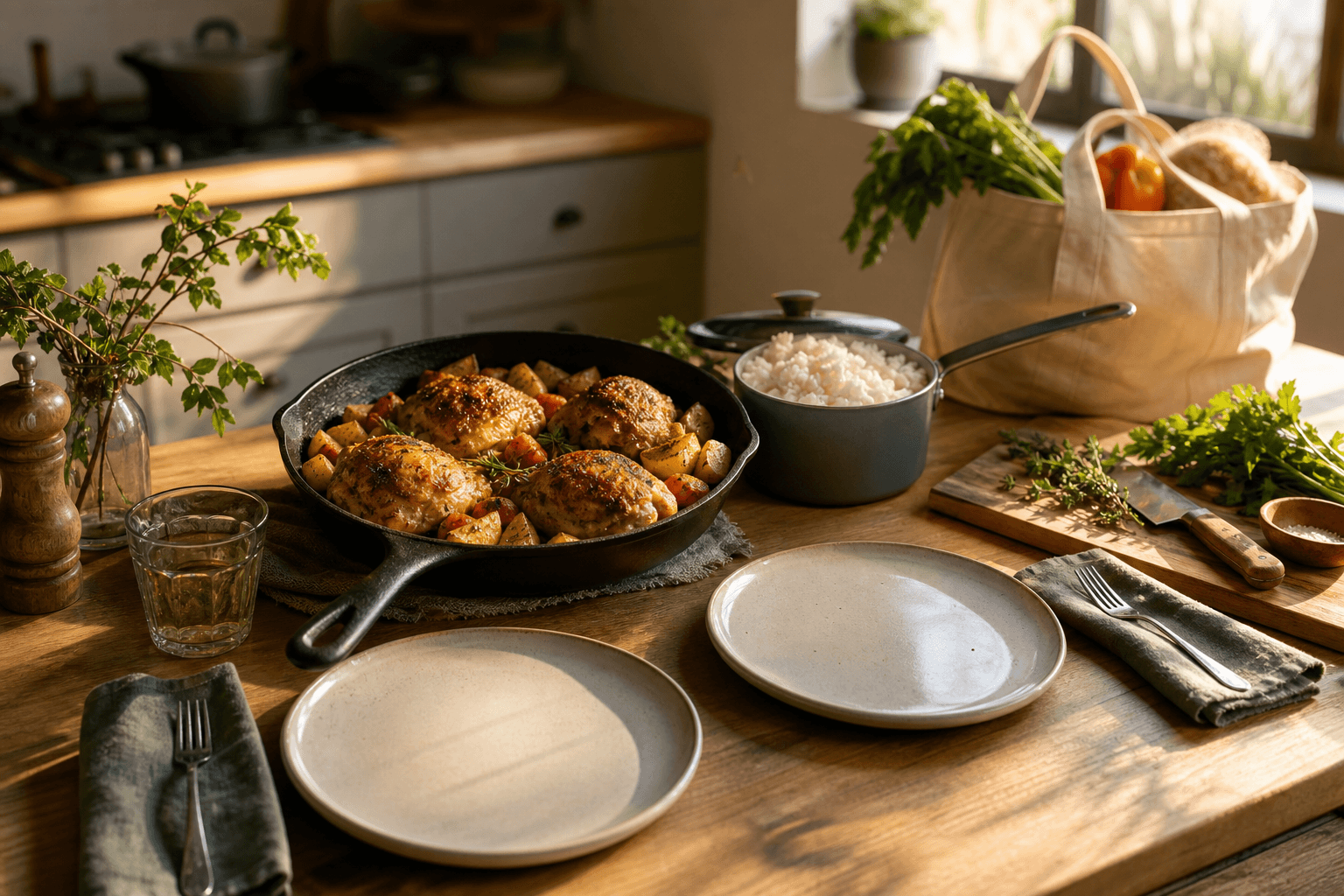
A realistic grocery budget for two adults cooking at home runs about $140 to $180 a week, per USDA data. Hit that number by planning five or six dinners around what you already have, building one list on a fixed budget, and batch cooking once for two nights.
Meal planning for two looks different than planning for a family. You're working with smaller portions, less room for error on waste, and often two different schedules to cook around. The good news: a couple's household is one of the easier setups to budget tightly, once you have a repeatable method instead of a fresh decision every Sunday.
How much should two people spend on groceries?
The USDA tracks four spending tiers for food eaten at home, and its most recent Cost of Food at Home data puts a two-person household (ages 19 to 50) at roughly $141 a week on the Thrifty Plan, $146 a week on the Low-Cost Plan, $181 a week on the Moderate-Cost Plan, and $226 a week on the Liberal Plan. Those figures already include the standard adjustment the USDA applies to two-person households, since smaller households tend to buy in smaller quantities and waste a slightly higher share of what they buy.
In plain terms: if you're spending close to $150 a week and eating well, you're already doing better than a lot of households. If you're closer to $220 or $250, there's usually room to cut without eating worse, mostly by shopping with a plan instead of shopping from memory. For the full framework we build every meal plan around, see our guide to how to meal plan for the week.
What's the fastest way to meal plan for two on a budget?
You don't need a spreadsheet or a subscription box. You need a short, repeatable process.
- Set a real weekly number. Pick a dollar amount before you plan a single meal, not after. $150 to $170 a week is a reasonable starting target for two people eating mostly at home.
- Shop your kitchen first. Before you write anything down, open the fridge, freezer, and pantry and note what's already there and close to its use-by date. This step alone prevents the most common form of waste: buying a duplicate of something you already own.
- Pick five or six dinners that share ingredients. Choose meals that reuse the same two or three proteins, a bag of rice, or a bunch of herbs, instead of five unrelated recipes that each need their own special ingredient.
- Write one list and shop once. A single trip built from an actual list beats three smaller trips built from memory almost every time, because extra trips are where impulse buys creep in.
- Cook once, eat twice. Double a chili, a soup, or a tray of roasted chicken and either freeze half or plan it into the next night's dinner on purpose.
- Build a rotation, don't reinvent it weekly. Keep a running list of 15 to 20 meals you both like and cycle through them. Decision fatigue, not the cost of food itself, is what usually kills a meal plan by week three.
If you're setting this up for the first time, weekly meal planning for beginners walks through the basics in more detail, and our meal planning for beginners template gives you a blank structure to start filling in.
What does a week of budget dinners for two look like?
Here's a sample week built around one Sunday roast, one big-batch dish, and deliberate reuse. Costs are rough estimates for two servings and will vary by region and store.
| Day | Dinner | Built from | Est. cost for two |
|---|---|---|---|
| Sunday | Roast chicken with potatoes and carrots | One whole chicken, root vegetables | $10 |
| Monday | Chicken tacos | Leftover roast chicken, tortillas, cabbage | $4 |
| Tuesday | Big-batch chili (makes 4 servings) | Ground beef, canned beans, canned tomatoes | $8 |
| Wednesday | Chicken and rice soup | Leftover carcass and chicken, rice, carrots | $3 |
| Thursday | Chili, reheated from Tuesday | Already paid for | $0 |
| Friday | Pasta with sausage and greens | Half a pack of sausage, pasta, spinach | $6 |
| Saturday | Loaded baked potatoes | Potatoes, cheese, leftover chili as topping | $5 |
That's about $36 for seven dinners, or roughly $2.50 a person per dinner, well under the USDA's weekly range because it doesn't count breakfast, lunch, or snacks. The exact total matters less than the pattern: one roast chicken and one pot of chili end up covering four of the week's seven dinners.
How do you keep it from falling apart after a few weeks?
Most budget meal plans don't fail because the recipes are wrong. They fail because nobody can remember what's already in the freezer, so the same rotation of five ingredients gets bought again and again while other things go bad in the back of the fridge. That's really an inventory problem, not a recipe problem.
This is the gap a pantry-aware planning tool is built to close. Well Stockd tracks what's in your fridge, freezer, and pantry, then shows you which recipes you can already make and flags what's about to expire, so the "shop your kitchen first" step from above takes a few seconds instead of a mental inventory every time you plan. It won't replace a real grocery budget, but it does make it a lot easier to stick to one.
How do you avoid wasting food when you're cooking for two?
Food waste is where a lot of grocery budgets quietly leak. The USDA's Economic Research Service estimates that roughly 31 percent of the food available at the retail and consumer level in the United States goes uneaten, and the average American family loses hundreds of dollars a year to food that spoils before it gets used. Two-person households are especially prone to this because recipes, packaging, and bulk deals are almost always sized for four.
A few habits fix most of it:
- Buy proteins in the size you'll use within a few days, or split a family pack and freeze the rest the day you buy it.
- Put a rough "eat by" order on what's in your fridge, and cook the oldest thing first.
- Treat your freezer as a budget tool: half a batch of chili or soup frozen flat in a bag is a free dinner two weeks from now.
- Plan one "leftovers and odds and ends" night a week instead of pretending every meal needs to be a fresh recipe.
Frequently asked questions
How much should two people spend on groceries a week?
Most couples land between $140 and $180 a week for food eaten at home, which lines up with the USDA's Thrifty and Low-Cost Food Plan estimates for a two-person household. Expect to spend more in high-cost metro areas and less if you buy in bulk and cook mostly from scratch.
Is meal planning cheaper than shopping without a plan?
Yes, in most cases. Planning means you buy for a fixed number of meals instead of grabbing whatever looks good that day, and it cuts down on the extra trips and impulse buys that add up fast.
How do I meal plan for two without ending up with duplicate leftovers?
Build the week around two or three anchor proteins that show up in different meals, like a roast chicken that becomes tacos and then soup, instead of cooking an unrelated dish from scratch every night. Checking what's already open in the fridge before you shop, as covered in our guide to how to meal plan for the week, keeps ingredients from getting forgotten behind something else.
Sources: USDA Food and Nutrition Administration, Cost of Food at Home reports; USDA Economic Research Service, food loss data