Recipes to use up food before it goes bad
Match whatever is about to turn with one of four flexible formulas, stir-fry, soup, frittata, or grain bowl, and a use-it-up dinner takes about 15 minutes to build. This guide walks through the method step by step and includes a table of 14 common foods with the fastest way to save each one.
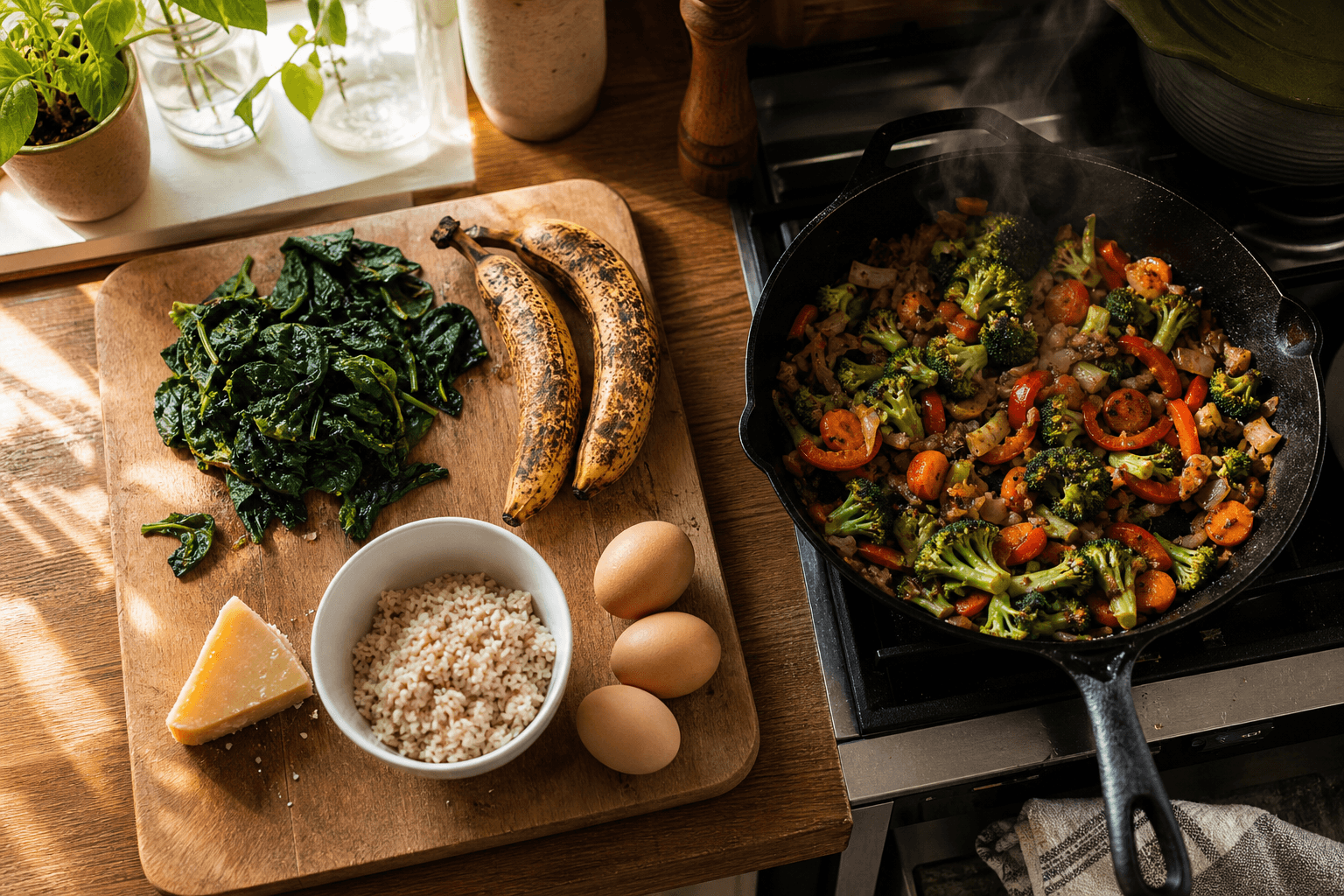
The fastest way to use up food before it spoils is to match what's turning with one of four flexible formulas: stir-fry, soup, frittata, or grain bowl. Each one absorbs wilting vegetables, extra protein, or half-used dairy, so you cook the food into dinner instead of tossing it.
This is the single most useful habit if you're trying to stop wasting food at home. It turns "we have nothing to eat" into "we have everything to eat, right now." A family of four throws out roughly $1,500 worth of food a year, and most of it isn't one dramatic spoiled roast. It's small, boring stuff: the last two ribs of celery, a heel of bread, cream that's a day from turning. A use-it-up meal catches exactly that.
The four formulas that use up almost anything
You don't need a recipe that matches your exact ingredients. You need a formula flexible enough to bend around whatever's closest to spoiling.
Stir-fry or fried rice is the best home for odd vegetables, small amounts of leftover protein, and rice that's been sitting in the fridge for a day or two. Day-old rice fries up better than fresh, because the grains firm up as they cool and stay separate in the pan instead of turning gummy.
Soup or stew absorbs mismatched ingredients better than anything else. Wilted greens, soft carrots, the last of a bag of onions, and any bones or vegetable scraps can all go in the pot, and simmering rounds out flavors that would clash raw.
Frittata or egg bake uses cheese ends, cooked vegetables, cream that's a day from its date, and a handful of herbs. Eggs are forgiving about proportions, so you can build a frittata around whatever three or four things need to go.
Grain bowl or pasta toss turns cooked grains or pasta, roasted vegetables, canned beans, and a spoonful of dressing into a full meal fast. It's the easiest formula for using up leftovers from an earlier dinner rather than raw ingredients.
Pick the formula that matches what you have the most of, then build around it.
How to build a use-it-up meal in 15 minutes
- Open the fridge, freezer, and pantry, and pull out anything wilting, softening, or dated within the next few days.
- Sort what you find into four piles: protein, vegetable, starch, and dairy or sauce. You don't need all four, but the more you have, the more formulas will work.
- Choose a formula. Lots of vegetables and a little protein points to stir-fry or soup. Cheese and dairy point to frittata. Leftover cooked grains point to a bowl.
- Cook the fastest-spoiling ingredient first, and add sturdier items later so nothing turns to mush.
- Season at the end. Salt, acid, and a fat like olive oil or butter make an odd combination of ingredients taste intentional.
- Portion whatever doesn't go into tonight's meal into the freezer, or set it aside for tomorrow's use-it-up round.
If you want the storage-time details behind this sweep, our guide on stopping food waste from the fridge covers how long specific items last once they're open or cooked.
Fourteen foods and the fastest way to use each one up
| Food nearing its date | Fastest way to use it up | Quick tip |
|---|---|---|
| Wilting salad greens | Wilt into soup or a frittata | Rinse and dry well first so they do not water down the dish |
| Soft or bruised tomatoes | Simmer into a quick sauce or soup base | Cut around any bruised spots; the rest cooks down fine |
| Overripe bananas | Mash into pancake batter or freeze whole | Peel first if freezing, so they are ready for smoothies later |
| Leftover cooked rice | Fried rice | Cold, day-old rice fries up firmer than fresh |
| Bendy carrots or celery | Soup, stock, or a quick saute | A 10-minute soak in ice water crisps them back up if you want them raw |
| Odd ends of shredded cheese | Frittata, quesadilla, or a grain bowl topping | Mixed cheese types melt together fine |
| Sour cream or yogurt near its date | Stir into soup, dressing, or baked goods | A thin liquid layer on top is normal; just stir it back in |
| Stale bread | Croutons, breadcrumbs, or a bread-based egg bake | Toast cubes in the oven with olive oil to crisp them up again |
| Cooked chicken or ground meat | Stir-fry, soup, or a grain bowl protein | Add it last, just to reheat, so it does not dry out |
| Soft bell peppers or mushrooms | Saute into stir-fry, frittata, or pasta | Slice thin so soft spots blend into the dish |
| Extra fresh herbs | Blend into sauce or freeze in oil | Chop and freeze in ice cube trays with olive oil |
| Milk about to turn | Baked goods, soup base, or pancake batter | If it still smells normal, it is fine to cook with |
| Opened canned beans | Soup, grain bowl, or a quick mash | Use within three to four days once opened |
| Ripe avocado | Mash for toast or blend into dressing | Toss with lemon juice and freeze in an airtight container if you cannot eat it today |
A shortcut for remembering what needs to be used first
None of this works if you don't notice what's turning until it's too late, and that's usually why food gets wasted in the first place. Well Stockd tracks what's in your fridge and pantry alongside its expiry window, then suggests recipes built around whatever is closest to going bad, so a use-it-up dinner takes one glance instead of a full cabinet search. If tracking dates by hand has never stuck for you, it's worth a look at the pantry inventory app built to reduce food waste.
Frequently asked questions
Is it safe to cook with vegetables that are wilted but not moldy? Yes. Wilting is moisture loss, not spoilage. Perk up leafy greens with a soak in ice water if you want them for a salad, or just cook wilted vegetables into soup, stir-fry, or a frittata, where texture matters less. Cut away any slimy or moldy spots and use the rest.
How long do cooked leftovers last before I need to use them up? The USDA recommends three to four days in the refrigerator at 40°F or below, refrigerated within two hours of cooking. After that window, freeze what's left for three to four months of good quality, or build it into a use-it-up meal before day four arrives.
What's the single best recipe for a fridge full of random vegetables? Soup. It's the most forgiving of the four formulas above: nearly any vegetable works once it's simmered in broth, and mismatched flavors round out with time, salt, and a little acid at the end. For more on organizing this habit long term, see our guide on wasting fewer groceries before they go bad.
Sources: USDA FSIS, Leftovers and Food Safety, USDA, Food Waste FAQs