Can You Use Walnuts Instead of Pine Nuts in Pesto?
Walnuts replace pine nuts in pesto one for one by volume, using 1/4 cup of nuts per 2 cups of packed basil. Toast them about 5 minutes so the tannic skins do not turn the sauce bitter, plus almond, seed and no-nut options with ratios.
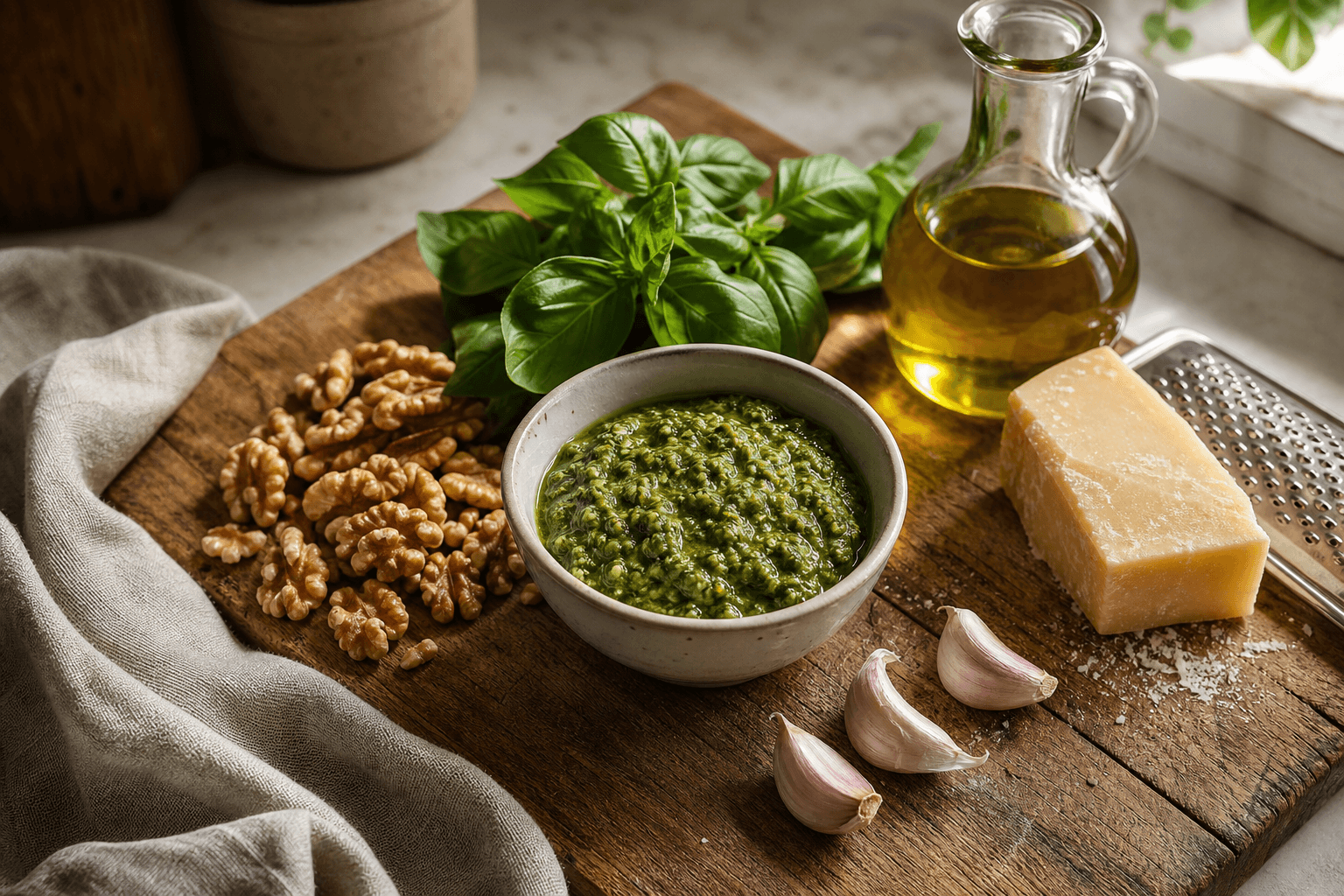
Yes, you can use walnuts instead of pine nuts in pesto, one for one by volume, and you should toast them about 5 minutes first. America's Test Kitchen's basil pesto calls for 1/4 cup of toasted pine nuts per 2 cups of packed basil leaves, and the recipe says to substitute almonds or walnuts in an equal amount. A recipe asking for 1/4 cup of pine nuts wants 1/4 cup of walnuts.
There is a half-as-much figure circulating online, where 1/4 cup of pine nuts becomes 2 tablespoons of walnuts. No test kitchen stands behind it. Use the equal amount.
Toasting is the step people skip, and it counts for more with walnuts than with pine nuts. Walnut skins are tannic, and five minutes in a dry skillet takes most of that bitterness out. Skipping it is the usual reason homemade walnut pesto tastes harsh.
Walnut and other pine nut substitutes for pesto
| Substitute | Ratio | Best for | Watch out |
|---|---|---|---|
| Walnuts | 1:1 by volume (1/4 cup per 2 cups packed basil) | Classic basil pesto, parsley pesto, pasta sauces | Tannic skins. Toasting is not optional here. |
| Almonds | 1:1 by volume | Sicilian-style pesto, any basil pesto | Sweeter and less tannic than walnuts, so the sauce reads milder |
| Walnuts, soaked overnight | 1:1 by volume | A smoother, more emulsified pesto | Optional technique from Tasting Table, not a tested requirement |
| Pumpkin or sunflower seeds | Roughly 1:1 by volume | Nut-free households and school lunches | Sunflower seeds can turn pesto green-grey. Treat the ratio as directional. |
| No nuts at all | Omit them, add 1 to 2 extra tablespoons of grated Parmesan | Tree nut allergies | Looser, sharper sauce. Directional, not a tested ratio. |
How to swap walnuts for pine nuts in pesto
- Measure the walnuts in the same volume your recipe gives for pine nuts. The ATK baseline is 1/4 cup of nuts per 2 cups of packed basil leaves.
- Toast the walnuts in a small heavy skillet over medium heat, stirring often, until they are just golden and fragrant, about 5 minutes. Tip them onto a plate so they stop cooking.
- Toast 3 unpeeled garlic cloves in the same skillet, about 7 minutes, if you want the full ATK version. Peel them once they cool.
- Bruise the basil. ATK seals 2 cups of packed leaves in a plastic bag and rolls over them with a rolling pin so the oils come out before anything reaches the food processor. This does more for the finished pesto than the nut choice does.
- Process the nuts, garlic, basil, 2 tablespoons of parsley if you are using it, 1/4 cup plus 3 tablespoons of olive oil, and 1/2 teaspoon of salt for about 1 minute.
- Stir in 1/4 cup of grated Parmesan or Pecorino Romano by hand at the end.
If your recipe measures nuts by weight, NDSU Extension puts 4 1/2 ounces of chopped nuts at 1 cup.
What changes when you use walnuts instead of pine nuts
Flavor moves the most. Pine nuts are buttery and faintly resinous, and walnuts land earthier and slightly more bitter. Toasting narrows that gap considerably, which is why the 5 minutes matter. Almonds sit between the two, sweeter than walnuts and closer to the pine nut version.
Texture stays close enough that most people will not comment. Tasting Table suggests soaking the walnuts overnight before blending for a creamier result. That comes from a roundup rather than a tested method, so treat it as an option rather than a step you owe the recipe.
Quantity is a lever too. ATK's 1/4 cup per 2 cups of basil is the herb-forward end, and recipes going up to 1/2 cup give you a richer, less grassy pesto. If walnut flavor is the point, measure high.
When not to use walnuts in pesto
Skip the swap when you are cooking for someone with a tree nut allergy. The FDA lists tree nuts as a major food allergen and requires the specific type, almonds and pecans and walnuts included, to be declared. Swapping walnuts into a recipe changes the allergen picture for whoever eats it, so say something if you are bringing pesto to a potluck or packing it in a school lunch. Toasted pumpkin seeds go in at roughly the same volume for those situations.
Related swaps for pesto ingredients
If basil is what you are short on rather than the nuts, the dried basil to fresh basil ratio covers that swap, and the fresh to dried herb conversion chart handles the rest of the herb shelf. For everything else, there is a printable ingredient substitution chart and a guide to fresh, frozen, and canned substitution ratios.
Find the pine nut substitute you already own
Well Stockd's substitution engine checks a recipe against what you already have and suggests swaps for whatever you are out of. Frozen and canned forms count as matches, and you can reject any suggestion so it stops coming back. It works alongside the app that tracks food expiration dates and the pantry inventory app, so the bag of walnuts at the back of the cupboard shows up when a recipe wants pine nuts.
Frequently asked questions about using walnuts instead of pine nuts
Do I need to toast the walnuts for pesto?
Yes. Toast them in a small heavy skillet over medium heat, stirring frequently, until they are just golden and fragrant, about 5 minutes. Toasting tames the tannic bitterness in walnut skins, which is the flavor people are reacting to when they say they do not like walnut pesto.
How much walnut per cup of basil in pesto?
About 2 tablespoons of nuts per cup of packed basil, scaling down from ATK's 1/4 cup of nuts to 2 cups of basil. Up to double that gives you a richer, less herb-forward pesto.
Will walnut pesto taste different from pine nut pesto?
Yes. Walnut pesto is earthier and slightly more bitter, where pine nuts are buttery and resinous. Toasting closes most of the distance.
What if I cannot use nuts at all in pesto?
Toasted pumpkin or sunflower seeds swap in at roughly the same volume, though sunflower seeds can tint the sauce green-grey. You can also leave the nuts out and add an extra tablespoon or two of grated Parmesan for body. Both are directional rather than tested ratios, so taste as you go.
Sources: America's Test Kitchen basil pesto, Tasting Table on pine nut substitutes, NDSU Extension Field to Fork: Basil, NDSU Extension FN198 food yields, FDA on major food allergens.
Track it in Well Stockd
Add what you have, see what you can cook tonight, and get a reminder before anything goes off.
