Meals That Freeze and Reheat Well, and Ones That Don't
Which meals freeze and reheat well and which don't, with USDA/FSIS freezer times, safe thawing and reheating to 165°F, and a sample week of freezer dinners.
Meals that freeze and reheat well are soups, stews, chili, braises, casseroles, burritos, meatballs and tomato sauces. Meals that don't are cream sauces, cooked pasta on its own, boiled potatoes, fried food and mayo salads. Freeze in portions, thaw in the fridge, and reheat to 165°F.
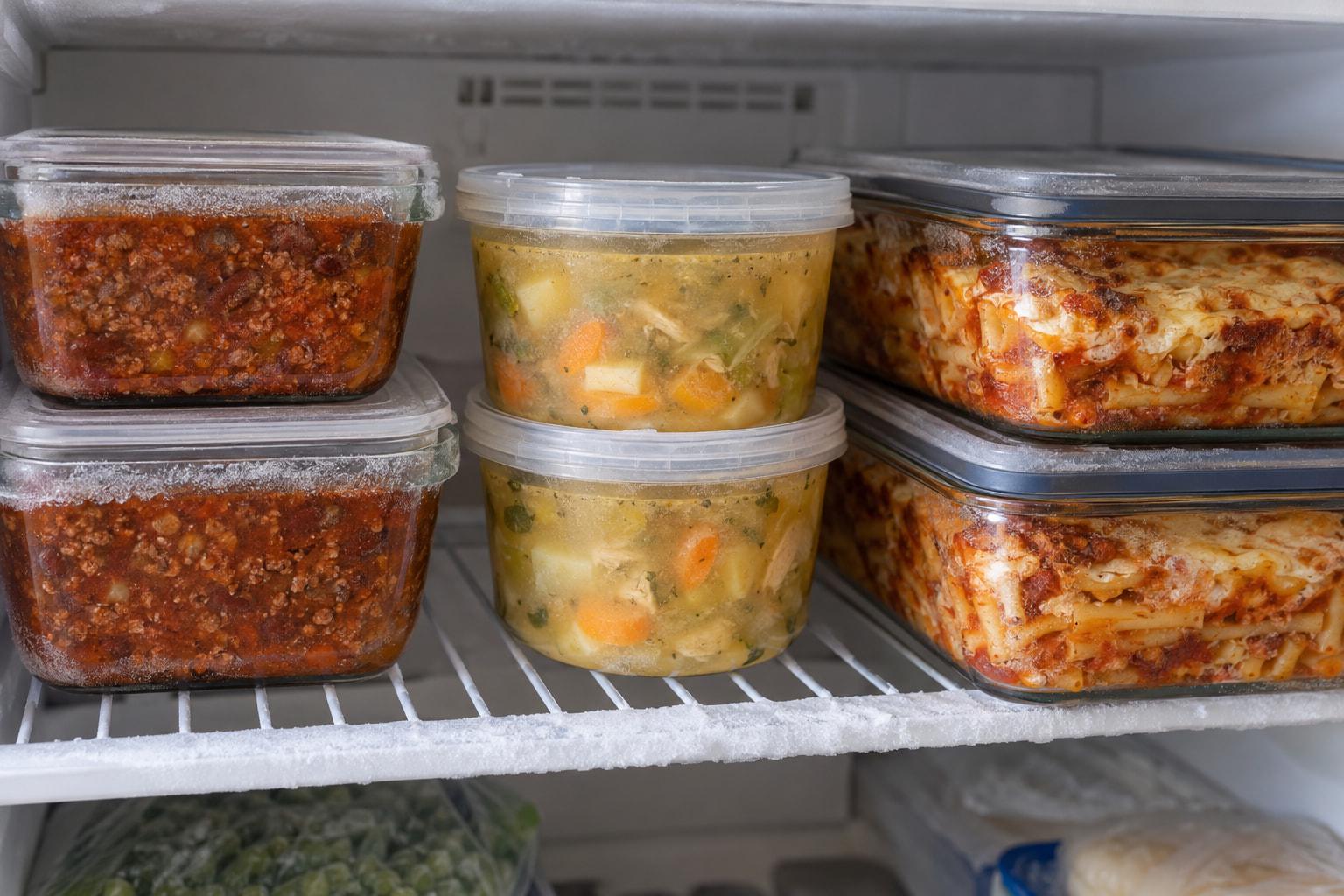
A good freezer meal tastes close to the day you made it. What makes that happen is what's in the dish and how you freeze and reheat it.
What are the meals that freeze and reheat well?
Dense, saucy and starchy dishes hold up. The sauce or broth helps keep the food from drying out. The National Center for Home Food Preservation publishes a list of foods that do not freeze well, which is the quickest way to rule things out.
| Meal | Freezes well? | Notes |
|---|---|---|
| Soups and stews with meat or vegetables | Yes | The USDA gives 2 to 3 months for best quality |
| Chili and bean dishes | Yes | Cool fast, freeze in portions |
| Braised meats and pulled chicken or pork | Yes | Freeze with some of their juices |
| Casseroles and baked pasta dishes | Yes | Sauce keeps the noodles from drying out |
| Meatballs in sauce | Yes | Good reheated on the stove |
| Burritos and wraps | Yes | Wrap tightly; reheat from frozen or thawed |
| Tomato-based pasta sauces | Yes | See our guide to freezing pasta sauce |
| Quiche and egg casseroles | Yes | Quiche 1 to 2 months, egg casseroles 2 to 3 |
| Pizza | Yes | 1 to 2 months |
The times above come from the FoodSafety.gov cold food storage chart, except quiche, where the FSIS egg storage chart gives the shorter 1 to 2 months. Cooked meat and poultry leftovers keep 2 to 6 months on the FoodSafety.gov chart. USDA's leftover guidance says 3 to 4 months for leftovers in general, and FoodKeeper says 2 to 3 months for leftovers with meat. Where they differ, plan on the lowest range, 2 to 3 months. These times are about flavor and texture. Food stored constantly at 0°F stays safe indefinitely.
Which meals don't freeze and reheat well?
Ice crystals damage cells and break up emulsions, according to FSIS. That's why some foods thaw badly.
| Food | What happens after thawing |
|---|---|
| Cooked pasta, spaghetti or rice frozen alone | Mushy, warmed-over taste |
| Boiled or baked potatoes | Soft, crumbly, mealy |
| Cream or milk sauces | May curdle or separate |
| Sour cream | Separates, turns watery |
| Cheese or crumb toppings on casseroles | Soggy |
| Fried foods | Lose their crispness |
| Mayonnaise, mayo-based salads | Separate |
| Cooked egg whites | Soft, tough, rubbery |
This list comes from the NCHFP table linked above. FSIS names mayonnaise, cream sauce and lettuce among the foods that don't freeze well. Egg, chicken, ham, tuna and macaroni salads also don't freeze well, according to the FoodSafety.gov chart. If a dish has one freezer-hostile ingredient, cook and freeze the rest and add that part fresh when you reheat. For example, freeze a chili without the sour cream and add it at the table. Our guides on freezing fresh pasta and raw potatoes go deeper on two common problem foods.
How do you freeze meals so they reheat well?
- Cool food quickly. Divide big batches into shallow containers so they chill fast, as FSIS advises for leftovers, and refrigerate within 2 hours of cooking.
- Portion it. Freeze meal-size amounts, not one huge block, so you only thaw what you'll eat.
- Pack it airtight. Squeeze the air out of bags, or use rigid containers with a little room at the top. Air causes freezer burn, which dries food in spots but doesn't make it unsafe, per USDA.
- Freeze flat or in a single layer. USDA says rapid freezing keeps ice crystals small, and that you shouldn't stack packages until they're frozen solid.
- Label it with the dish and the date.
If you freeze a meal within 3 to 4 days of cooking it, you're well inside the safe window. FSIS says to freeze leftovers within 3 to 4 days, and not to refreeze anything left out for more than 2 hours (1 hour above 90°F).
How do you reheat frozen meals safely?
Reheat to 165°F, measured with a food thermometer, according to FSIS. Bring sauces, soups and gravies to a rolling boil. Cover the dish to hold in moisture, and when you use a microwave, rotate the food and check the temperature in several spots, since microwaves have cold spots.
You have three safe ways to thaw first: in the refrigerator, in cold water, or in the microwave. The refrigerator is slowest but the food stays safe the entire time. After a refrigerator thaw, use the leftovers within 3 to 4 days, or refreeze them. FSIS says food thawed in cold water should be cooked before it's refrozen, and food thawed in the microwave can be refrozen once it's reheated to 165°F. Never thaw food on the counter.
If you don't have time to thaw, FSIS says it's safe to reheat frozen leftovers without thawing, in a saucepan or microwave for soups and stews, or in the oven or microwave for casseroles. It takes longer. Don't use a slow cooker to reheat leftovers, since FSIS doesn't recommend it.
If the food smells or looks off after thawing, don't taste it to find out. When in doubt, throw it out.
What is a sample week of freezer meals?
Here's how to set up a week with food you've made ahead. The dishes are ideas, not recipes.
| Day | From the freezer | Add fresh |
|---|---|---|
| Monday | Beef chili | Shredded cheese, tortilla chips |
| Tuesday | Meatballs in tomato sauce | Cooked pasta or a roll |
| Wednesday | Chicken and vegetable soup | Crusty bread |
| Thursday | Baked pasta casserole | A green salad |
| Friday | Burritos | Salsa, sour cream |
Cook the fresh parts the day you eat. Pasta, rice, salad and dairy are the parts that suffer in the freezer, so keeping them out makes the whole plan better.
Plan freezer meals with Well Stockd
Well Stockd doesn't tag recipes as freezer-friendly. Its built-in library of more than 3,800 recipes is mostly dinners for two that you cook now, so use the dish types above to decide what to double and freeze. You can add your own batch recipes by pasting a link or text, put them on the weekly planner, and let the plan feed your shopping list.
Add three foods from your kitchen and see what you can cook. Try it free.
More on freezing: our hub on freezing food, a printable freezer storage chart and the freezer dump meals guide.
FAQ
What meals freeze and reheat the best?
Soups, stews, chili, braises, casseroles, meatballs in sauce and burritos freeze best, according to USDA and NCHFP guidance. They're moist, dense or saucy, so they survive freezing without drying out. Expect 2 to 3 months of best quality for soups and stews.
Can you reheat frozen meals without thawing?
Yes. FSIS says it's safe to reheat frozen leftovers without thawing, in a saucepan or microwave for soups and stews and in the oven or microwave for casseroles. Heat to 165°F. It takes longer than reheating thawed food.
Can you refreeze meals that freeze and reheat well?
Yes, with limits. A meal thawed in the refrigerator can go back in the freezer without cooking, with some quality loss. Food thawed in cold water must be cooked first. Don't refreeze anything that sat out for more than 2 hours.