Can I use half and half instead of heavy cream?
Half-and-half swaps 1:1 for heavy cream in soups, sauces and baking, and never whips. Ratios, the butter fix, curdling fixes and when to skip the swap.
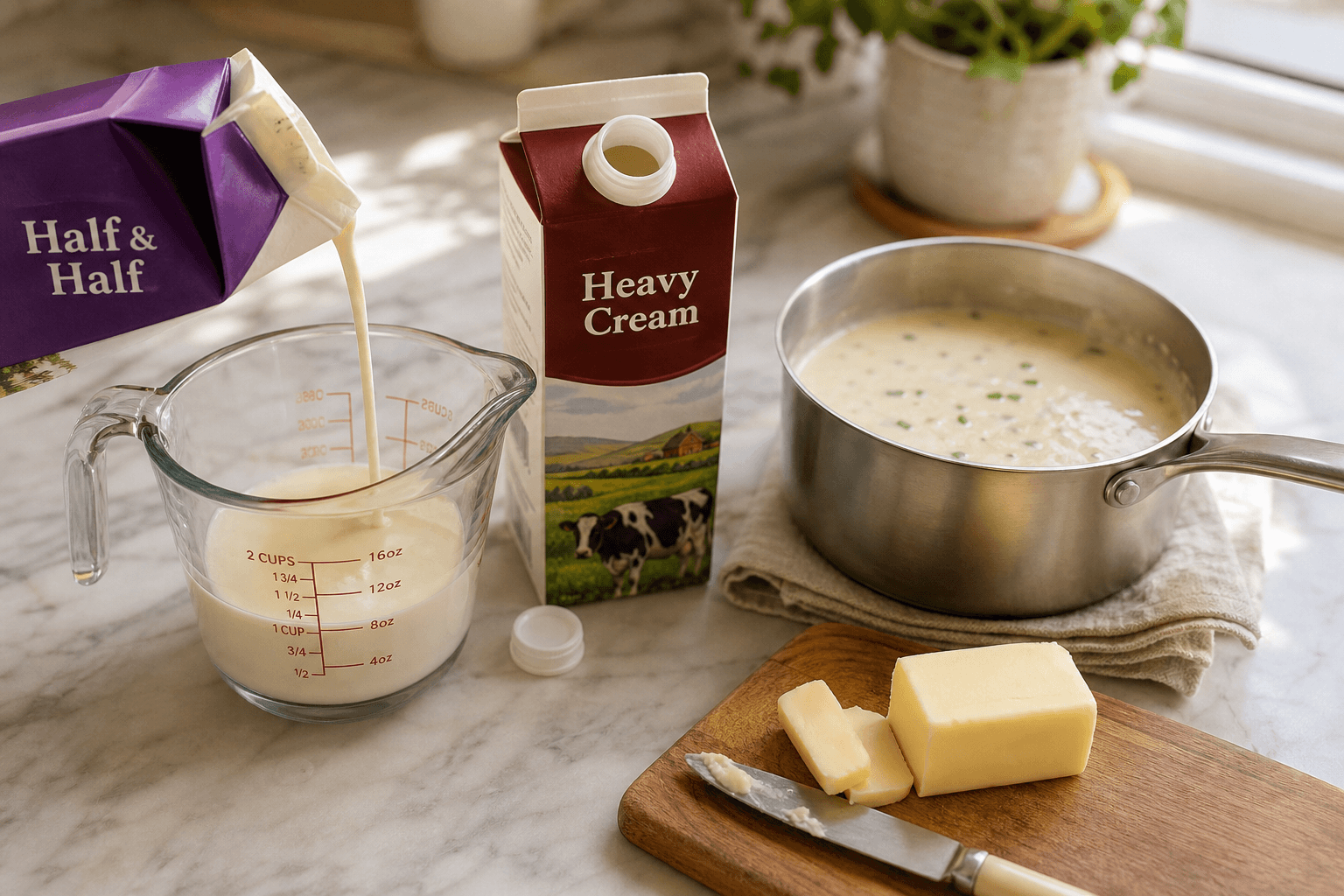
Yes for cooking and baking, no for whipping. Half-and-half is 10.5% to under 18% milkfat and heavy cream starts at 36%, so pour it in 1:1 for soups, sauces and batters, or whisk 1/8 cup melted butter into 7/8 cup half-and-half when the recipe needs that fat back.
Those numbers are federal definitions, not brand differences. Under the FDA standards of identity in 21 CFR Part 131, half-and-half is milk and cream mixed to at least 10.5% and under 18% milkfat, light whipping cream is 30% to under 36%, and heavy cream has to hit 36% or more. Every difference you taste comes out of that gap.
Half-and-half instead of heavy cream: ratios at a glance
| Substitute | Ratio | Best for | Watch out |
|---|---|---|---|
| Half-and-half, straight swap | 1 cup for 1 cup heavy cream | Quiche, custards, baked goods, mashed potatoes, gratins, coffee drinks | Thinner result, and it curdles more readily. Add it off the boil |
| Half-and-half plus melted butter | 7/8 cup half-and-half plus 1/8 cup melted butter equals 1 cup heavy cream | Pan sauces, cream soups, anything that has to reduce or coat | Still will not whip. The butterfat is not in whippable form |
| Whole milk plus butter, to make half-and-half | 7/8 cup whole milk plus 1/2 Tbsp butter equals 1 cup half-and-half | A recipe that wants half-and-half when you have neither | Melt the butter and whisk it in warm so it disperses |
| Evaporated milk, to make half-and-half | 1 cup evaporated milk equals 1 cup half-and-half | Cooked dishes where a little extra body helps | It carries a cooked flavor that shows up in coffee more than in cooking |
| Heavy cream plus milk, the reverse swap | Roughly equal parts whole milk and heavy cream | Coffee, and recipes calling specifically for half-and-half | Approximate. It comes from the fat bands, not a published chart row |
| Nothing, when it has to whip | Not applicable | Nothing | Use chilled coconut cream or the chilled-evaporated-milk method instead |
How to swap half-and-half for heavy cream
- Check what the cream is doing in the recipe. If it gets baked, or stirred into something carried by flour, eggs or starch, go straight 1:1 and stop reading here.
- If the sauce has to reduce, coat a noodle or hold together on the plate, use the fat-corrected version. Melt 1/8 cup butter, whisk it into 7/8 cup half-and-half, and use that cup wherever the recipe says heavy cream.
- Add the dairy near the end of cooking, with the pot at a simmer rather than a boil.
- For anything acidic like tomato, wine or lemon, temper it first. Ladle a little hot liquid into the half-and-half, stir, then pour that back into the pot.
- If the recipe says simmer until thickened, do not wait for it. Half-and-half will not reduce into a thick sauce. Finish with a pat of butter or a cornstarch slurry.
What changes when you cook with half-and-half instead of heavy cream
The texture goes thinner and the mouthfeel goes lighter. In baking that is usually invisible, because flour and eggs carry the structure and the missing fat has nothing to do in a quiche. In a reduction sauce it shows immediately: the sauce stays loose and slides off the pasta instead of clinging to it.
The other change is stability. Fat protects dairy proteins from heat and acid, so half-and-half breaks at temperatures and acidity levels that heavy cream shrugs off. That is a cosmetic problem rather than a safety one, though a grainy tomato cream sauce is hard to fix once it splits.
When not to use half-and-half instead of heavy cream
Whipped cream is the hard no. America's Test Kitchen whipped both light cream and half-and-half and reported that they stayed liquid no matter how long the mixer ran, because cream needs at least 30% milk fat to trap and hold air. Half-and-half tops out below 18%, so it is nowhere near the line. Chilling the bowl, the beaters and the carton is good practice with real cream and changes nothing here. Ganache and anything else that depends on cream setting up firm falls in the same category, because those recipes lean on the fat for structure rather than for liquid.
Related half-and-half and heavy cream swaps
- Substitute for heavy cream in soup goes deeper on the curdling problem.
- Substitute for heavy cream in pasta sauce is the one to read before you reduce anything.
- Can I use milk instead of heavy cream? is the next step down the fat ladder.
- Milk and butter substitute for heavy cream uses the same fat-correction trick with milk as the base.
- Buttermilk substitute if acid is the thing you are actually missing.
- Printable ingredient substitution chart for the fridge door.
Let your kitchen suggest the half-and-half swap
Well Stockd's substitution engine reads what a recipe calls for against what is in your fridge and pantry, then offers swaps from your own shelves when you are out of something. Frozen and canned forms count, and you can reject any swap you would never make so it stops appearing. It works alongside an app to track food expiration dates and a pantry inventory app, so the carton in the door gets used while it is still good.
Half-and-half instead of heavy cream: common questions
Can I use half-and-half instead of heavy cream?
Yes in cooking and baking, 1:1. No for whipped cream, because half-and-half does not have enough fat to whip.
How do I make half-and-half act like heavy cream?
Whisk 1/8 cup melted butter into 7/8 cup half-and-half. It cooks like cream and still will not whip.
Why won't half-and-half whip?
It is 10.5% to 18% milkfat. Cream needs at least 30% to trap and hold air, so half-and-half stays liquid.
Will half-and-half curdle in soup?
More easily than heavy cream. Add it at the end, off a boil, and temper it into acidic soups.
Sources: eCFR, 21 CFR Part 131 Subpart B | FDA 21 CFR 131.150, heavy cream | America's Test Kitchen, whipping light cream vs heavy cream | Purdue Extension and NDSU Extension, FN198