Can you freeze food? The complete guide to what freezes well
Almost any food can go in the freezer safely, since USDA says it stays safe indefinitely at 0°F. This guide covers what freezes well, what to skip, and how to do it right, with links to a full page for every food.
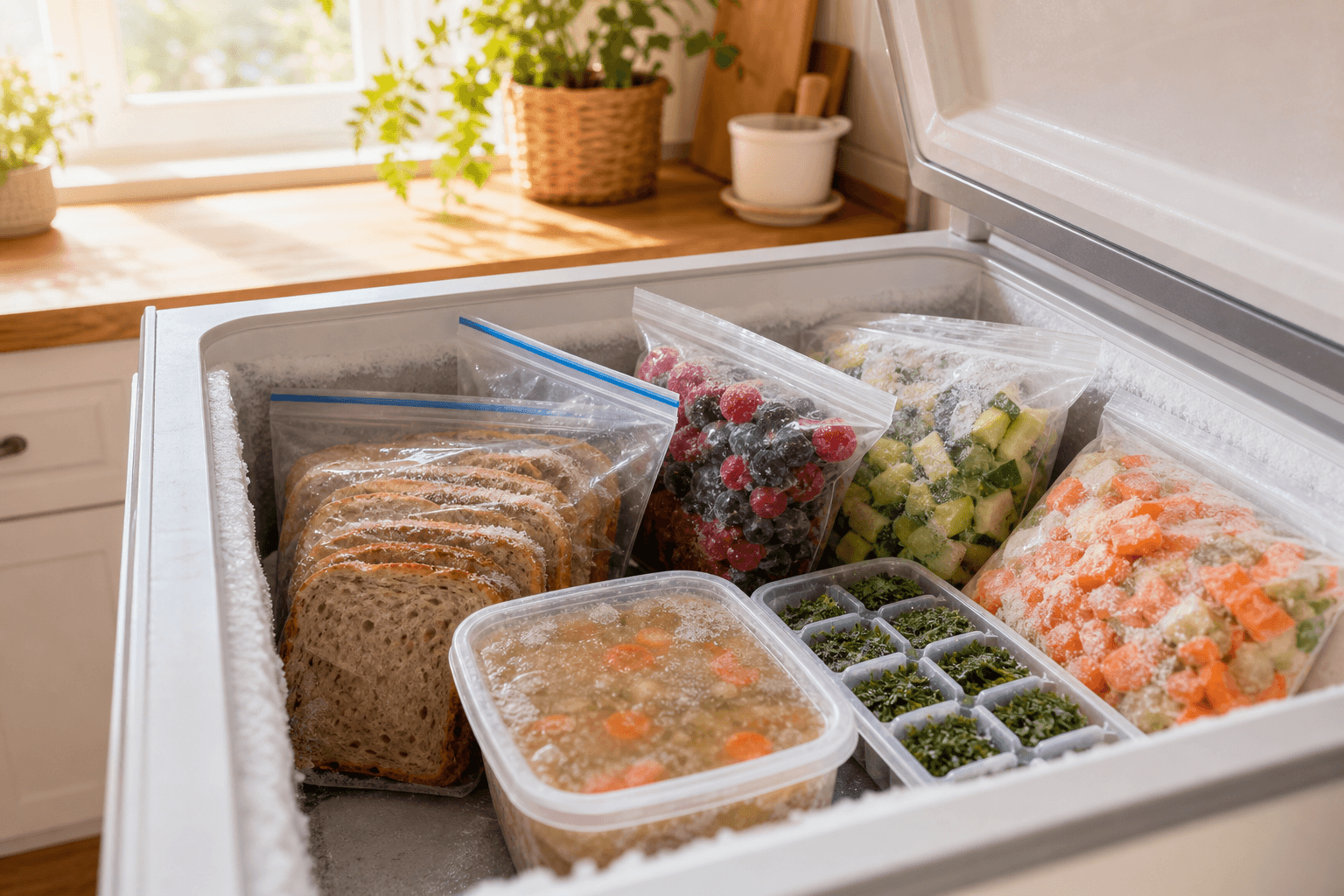
Yes, you can freeze almost any food, and at a steady 0°F it stays safe to eat indefinitely, according to USDA. Quality is the catch: mayonnaise, cream sauces, lettuce, and whole eggs in the shell turn watery or grainy, while most dairy, produce, and leftovers freeze just fine with the right prep.
The short version
- Food frozen continuously at 0°F is safe to eat indefinitely; freezer times are about quality, not safety.
- A short list of foods, including mayonnaise, cream sauces, lettuce, and whole eggs in the shell, should skip the freezer entirely.
- Freezer burn is dry and unappetizing, not unsafe. Trim it and use the rest.
- You can safely refreeze food that thawed in the refrigerator and stayed at 40°F or below.
- Airtight packaging, small portions, and clear labels do more for freezer quality than any single food's special trick.
- If food sat out too long or smells off, throw it out. When in doubt, don't risk it.
Freezer times at a glance
| Food | Freezes well? | Best-quality window | Watch for |
|---|---|---|---|
| Milk, heavy cream | Yes, with prep | Milk about 3 months, heavy cream 3 to 4 months | Separates; shake or blend after thawing |
| Cream cheese, ricotta | Yes, texture changes | No USDA window; FoodKeeper does not recommend freezing them | Grainy on its own; best stirred into cooked or baked dishes |
| Greek yogurt | Yes, texture changes | About 1 to 2 months | Separates; stir well or use in smoothies and baking |
| Hard and semi-hard cheese | Yes | About 6 months | Firmer and more crumbly after thawing |
| Eggs, out of the shell only | Yes | Up to about 12 months | Never freeze eggs in the shell |
| Cooked rice | Yes | About 6 months | Cool quickly, portion, reheat to 165°F |
| Cooked chicken, ground beef | Yes | About 3 to 4 months | Cool quickly, portion, reheat to 165°F |
| Raw potatoes | Only if blanched or cooked first | Varies by prep | Raw and whole, they turn grainy and watery |
| Avocado, mashed or pureed | Yes | A few months | Whole avocados do not freeze well |
| Coconut milk | Yes | A few months | Separates; shake or blend after thawing |
| Chopped onions | Yes | About 10 to 12 months | Prep first: chop or mince before freezing |
| Chopped garlic, fresh herbs | Yes | Garlic about 1 month, herbs 1 to 2 months | Best minced, or frozen in oil or water |
| Fresh pasta | Yes | About 1 to 2 months | Cook straight from frozen, do not thaw first |
| Bread | Yes | About 3 months | Wrap tightly to prevent freezer burn |
These are quality windows, not safety cutoffs. Each linked guide below has the specific numbers, prep steps, and thawing instructions for that food.
Is frozen food safe indefinitely?
Freezing to 0°F stops bacteria, yeasts, and molds from growing. Food kept at a steady 0°F stays safe to eat indefinitely, according to USDA's Food Safety and Inspection Service. Quality is a different story: ice crystals, oxidation, and slow moisture loss change texture and flavor over time, which is why every storage chart, including the one on this page, lists a best-quality window rather than a hard expiration date.
Can you freeze dairy and eggs?
Most dairy freezes fine. It just doesn't always come out looking like it went in. Milk and heavy cream separate in the freezer and need a good shake or blend after thawing, while cream cheese and ricotta turn grainy and work best stirred into cooked dishes rather than spread on a bagel. Greek yogurt and most other cheese freeze safely too, each with its own texture quirks. Eggs are the one item that needs a firm rule: never freeze them in the shell, only beaten or separated.
Can you freeze cooked rice, chicken, and ground beef?
Cooked leftovers are some of the best freezer candidates you have. USDA guidance puts cooked rice at about 6 months for best quality, and cooked chicken and cooked ground beef at about 3 to 4 months, as long as you cool them quickly, portion them into shallow containers, and reheat to 165°F before eating. Ground beef deserves extra attention because it can look and smell fine even after it has gone downhill in the freezer. If you're unsure about a package that has been tucked away a while, check how to tell if frozen ground beef has gone bad before you cook it.
Can you freeze raw potatoes, avocado, and coconut milk?
Some produce needs a little prep before it goes in the freezer. Raw potatoes turn grainy and watery unless you blanch or fully cook them first, and avocado only holds up mashed or pureed, not whole. Coconut milk freezes well but separates, so plan to shake or blend it back together after thawing. For onions, garlic, and herbs, chopping ahead makes all the difference: see how to handle chopped onions and garlic, caramelized onions, and fresh herbs.
What foods should you never freeze, and what surprises freeze well?
A handful of foods turn to mush or separate no matter what you do: mayonnaise, cream-based sauces, and whole eggs in the shell are the classic offenders. Our full rundown of what foods should you not freeze walks through the reasons why. On the flip side, plenty of foods freeze better than most people expect. Check out foods you didn't know you could freeze and can you freeze fresh pasta for two of the more surprising wins.
Is freezer-burned food safe to eat?
Freezer burn looks alarming, with those grayish, leathery patches, but USDA is clear that it's a quality issue, not a safety one. It happens when air reaches the surface of food and pulls out moisture, and the fix is simple: trim the affected spot and cook the rest as normal. Bread is especially prone to it because so much surface area is exposed. Gluten free loaves are covered in freezing gluten free bread. For the details on both, see is freezer burned meat safe to eat and how to prevent freezer burn on bread.
Can you refreeze food after it thaws?
Yes, with one condition: food that thawed in the refrigerator and stayed at 40°F or below is safe to refreeze without cooking it first, though the texture may suffer a bit more each time. Food that thawed on the counter or sat out for more than two hours is a different story. When in doubt, throw it out rather than risk it. The specifics shift depending on what you're refreezing: see can you refreeze thawed food, can you refreeze thawed vegetables, and can you refreeze thawed beef for details.
How long does it take to thaw food safely?
USDA lists three safe ways to thaw frozen food: in the refrigerator, in a leak-proof bag under cold running or repeatedly changed water, or in the microwave if you cook the food immediately afterward. Refrigerator thawing is the slowest but the safest, since the food never leaves a safe temperature. Chicken is one of the trickiest to plan around, since size and shape change the timeline so much. We broke it down separately in how long to thaw chicken in the fridge.
How do you cook frozen vegetables so they don't turn mushy?
You don't need to thaw most frozen vegetables before cooking them, and in most cases you shouldn't. Thawing first releases water that steams the vegetables instead of browning them, which is the main reason frozen vegetables get a bad reputation. High heat and a dry pan fix most of the problem. Skip the thaw and go straight from freezer to pan. Our guide to how to cook frozen vegetables so they taste good has the full method.
How do you freeze food the right way?
Good technique matters more than any single food's quirks. Squeeze out air, use freezer-safe bags or containers, leave headspace for liquids since they expand as they freeze, and label everything with the date. Portioning food into meal-sized amounts before freezing also helps it thaw faster and more safely later, since smaller portions move through the danger zone more quickly. Keep our printable freezer storage chart on the fridge for a quick reference across your whole freezer.
Keep track of what's in your freezer
Freezing food well isn't the hard part. Remembering what's in there, and when it went in, is the harder job. Once bags and containers stack up, good food gets lost behind the ice cream, or forgotten entirely until it's freezer burned. Well Stockd's app to track food expiration dates logs freezer items right alongside your fridge and pantry, so you always know what you have and when it went in.
Frequently asked questions
Does freezing kill bacteria? No. Freezing stops bacteria, yeasts, and molds from growing, but it does not kill them. Once food thaws, anything that was present becomes active again, so normal food safety rules still apply.
Do I need to blanch vegetables before freezing them? Most vegetables benefit from a quick blanch, since it stops the enzyme activity that causes color, flavor, and nutrient loss in the freezer. A few, like onions, peppers, and herbs meant for short-term use, can skip it.
How long can food stay in a freezer set at 0°F? Indefinitely, from a safety standpoint. USDA guidance says food frozen continuously at 0°F is always safe to eat. The freezer times you see in charts, including the one on this page, are for best quality, not for safety.
Related guides
- Can you freeze cream cheese?
- Can you freeze heavy cream?
- Can you freeze milk?
- Can you freeze Greek yogurt?
- Can you freeze ricotta cheese?
- How long can you freeze cheese?
- Can you freeze eggs?
- Can you freeze cooked rice?
- Can you freeze cooked chicken?
- Can you freeze cooked ground beef?
- How to tell if frozen ground beef has gone bad
- Can you freeze raw potatoes?
- Can you freeze avocado?
- Can you freeze coconut milk?
- Can you freeze chopped onions and garlic?
- Can you freeze caramelized onions?
- How to freeze fresh herbs
- Foods you didn't know you could freeze
- What foods should you not freeze
- Can you refreeze thawed vegetables?
- Is freezer burned meat safe to eat?
- Can you freeze fresh pasta?
- How to cook frozen vegetables so they taste good
- Can you refreeze thawed food?
- Can you refreeze thawed beef?
- How long to thaw chicken in the fridge
- How to prevent freezer burn on bread
- Printable freezer storage chart
Sources: USDA FSIS, Freezing and Food Safety, USDA FSIS, The Big Thaw, Safe Defrosting Methods, USDA FSIS, What is freezer burn?, FoodSafety.gov, Cold Food Storage Chart.
Track it in Well Stockd
Add what you have, see what you can cook tonight, and get a reminder before anything goes off.
